
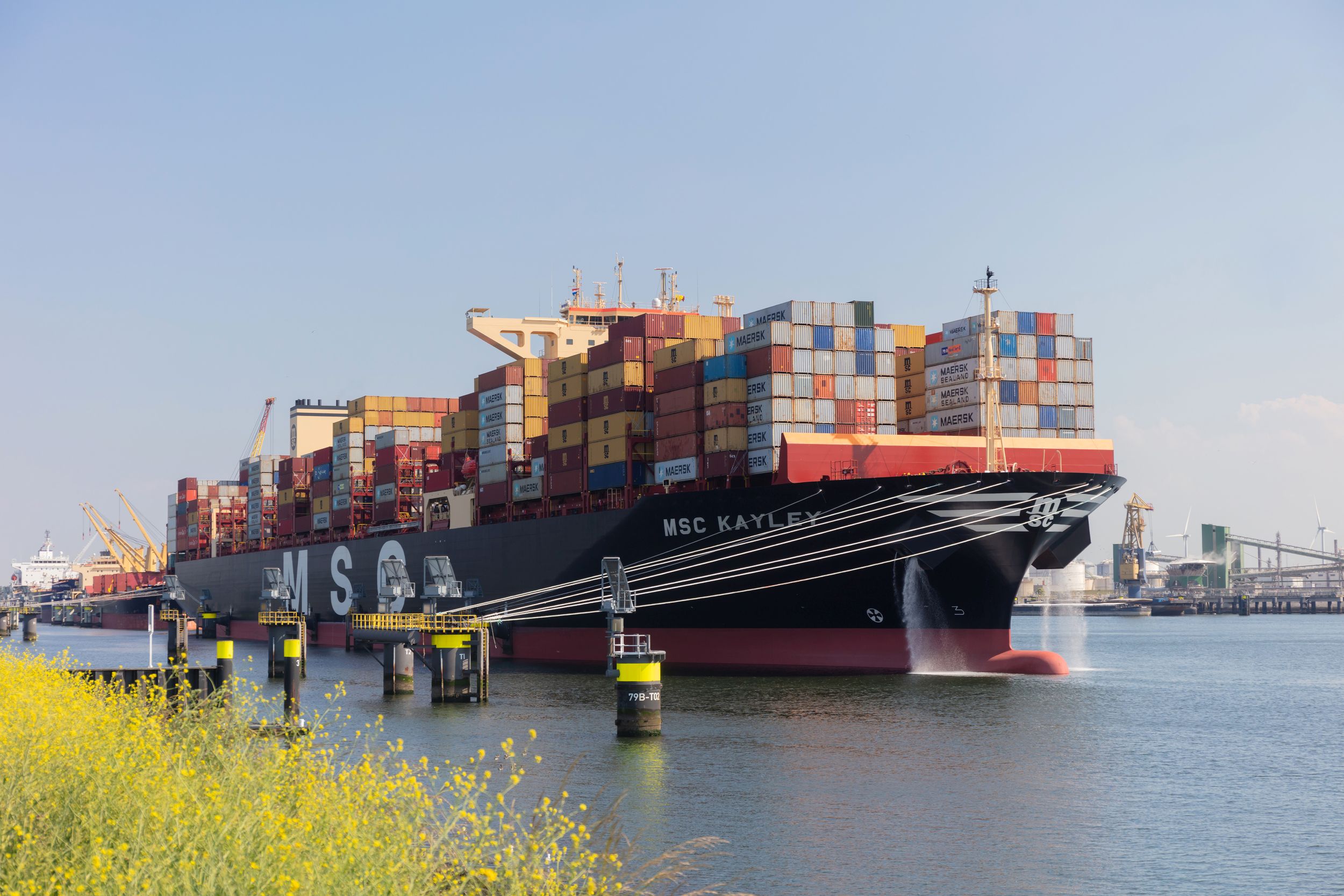
Spare a thought for shipping companies. Since 2020, the industry has had to contend with the coronavirus outbreak; the Russia-Ukraine war; Houthi attacks in the Red Sea and the subsequent diversion of vessels around the Cape of Good Hope; a realignment of the container shipping alliances; changing regulatory frameworks; clashes between India and Pakistan; extreme weather and natural disasters; port strikes; sinkings, ship fires and cargo spills; and the U.S.-Israel-Iran conflict.
Almost all of those disruptions are either still active or recurring. No wonder, then, that in Lineage’s Cold Chain Insights Survey, published earlier this year, resilience emerged as a defining priority for supply-chain leaders.
So, in this increasingly dislocated world, how can liner shipping help? Resilience demands flexibility. There are two ways of shipping temperature-controlled cargoes, namely, ‘conventional’ and ‘containerized.’ Having two options should provide flexibility. Unfortunately, there is a huge imbalance between the two.
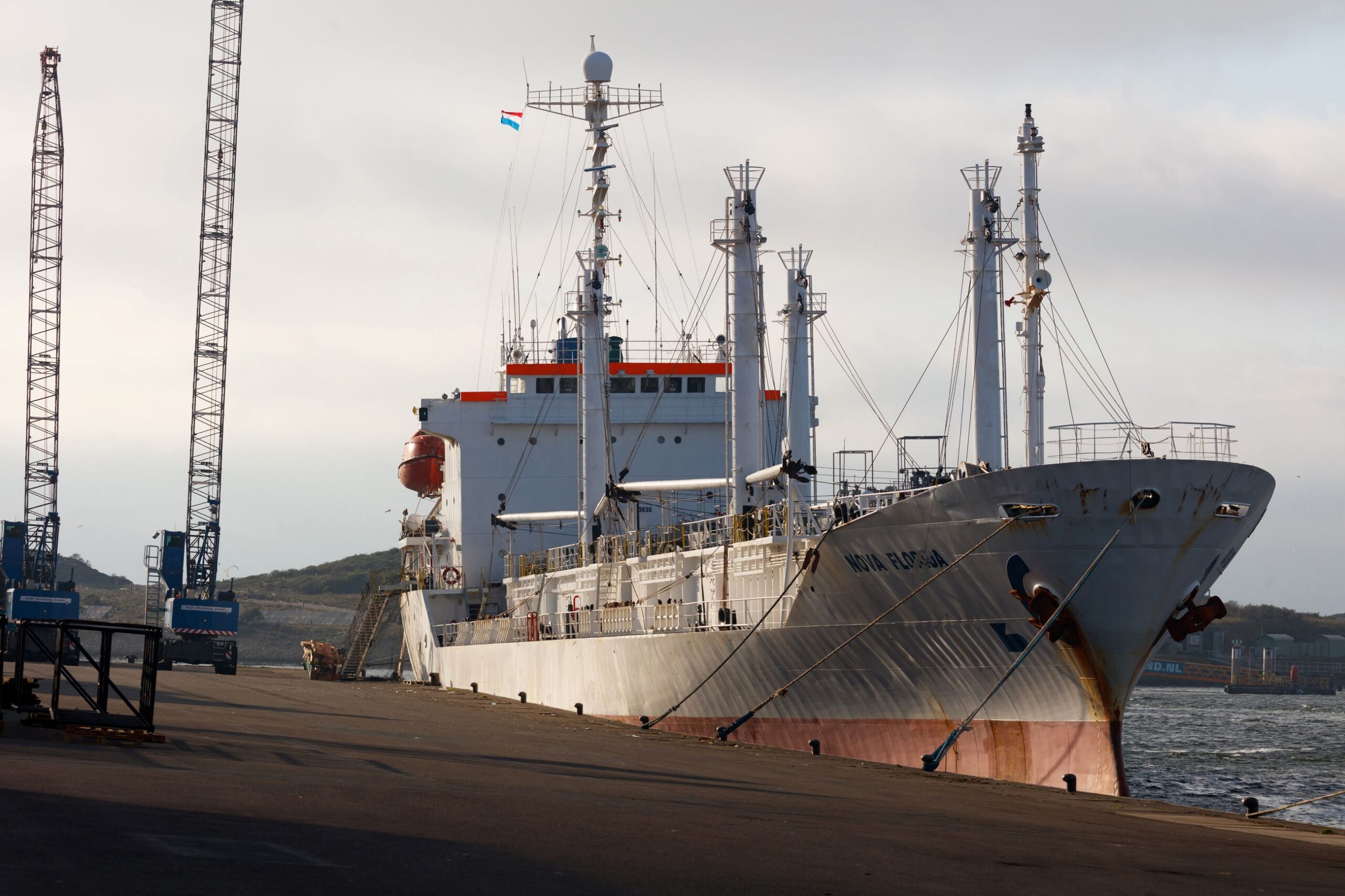
Conventional reefer shipping is the modern-day equivalent of the legacy breakbulk form, where pallets are piled high with boxes of produce which must be moved, usually by crane, on and off vessels.
However, this form of shipping is but a shadow of what it once was. In its Reefer Analysis 2025, Dynamar counted fewer than 500 conventional reefer ships in operation with a capacity to lift just 170 million cubic feet of perishable cargo.
Why? The conventional reefer sector has fallen victim to the great disruptor of the twentieth century, the shipping container. This concept really gained traction after container ships first crossed the Atlantic in the late 1960s and has since eaten into all forms of legacy breakbulk shipping, not just perishables. Today, there are more than 7,500 container ships in operation, able to carry 34 million twenty-foot equivalent units (TEUs) at once. Almost all of them are equipped to handle refrigerated container units.
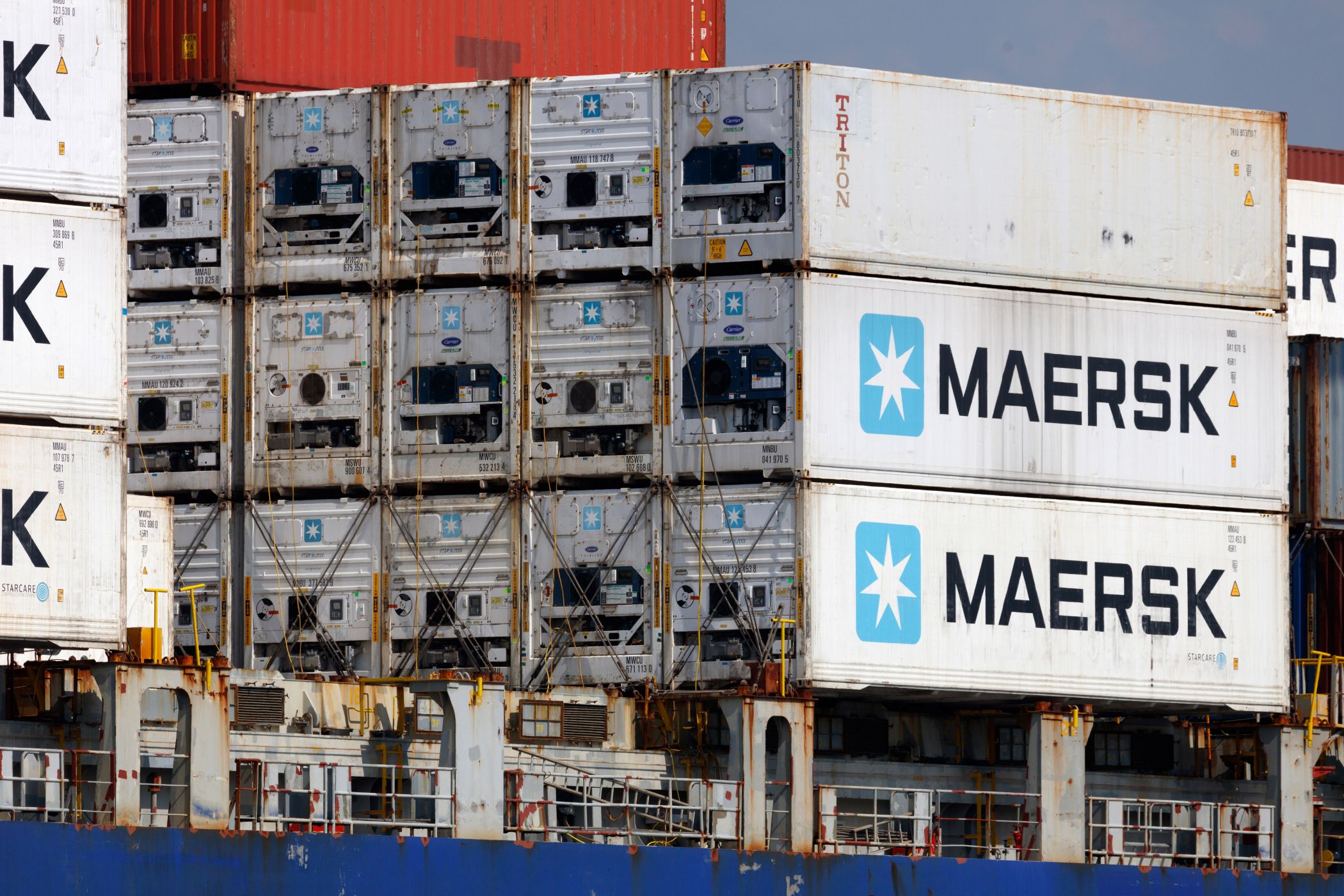
In the same study, Dynamar counted almost 3.5 million reefer plugs across the entire container fleet. If they were all fitted with 40-foot high cube containers, the most common size, they could carry close to 8.3 billion cubic feet of cargo, or almost 50 times the capacity offered by the breakbulk sector.
Although there are approximately as many reefer containers as plugs (perhaps slightly more), not all plugs will be in use at once. However, having more plugs than are actually needed gives greater flexibility in stowing the containers on board, thereby reducing individual cargo delays.
Alongside ships and containers, ports represent a vital nodal element for flexibility and resilience. There are around 1,400 ocean container terminals around the world, operated by port authorities, independent terminal operators, the shipping lines, or a combination of these.
Connecting these points is not always easy, but given the size of the container ship fleet, such links are increasingly feasible. Container shipping lines vary significantly in size and shape and have networks to match.
A shipping line may sail between two ports or a network of up to 500 ports (out of a global total of around 800-850 actively handling containers). Combining all these networks provides not only plenty of overlap — and thereby flexibility and redundancy — but also global coverage.
Thus, through ships, containers, ports and terminals — and cooperation — the container shipping network is a true matrix. In addition, the hub and spoke concept that makes great use of transshipment ports to switch cargoes between feeder and mainline, or East-West and North-South services, ensures that the network has flexibility and redundancy.
Transhipment is a transitory business and can be relatively easily switched from one port to another. Algeciras is congested? No problem, we can use Tangier across the Strait of Gibraltar; Kingston (Jamaica) is experiencing operational issues? Well, let’s go to Freeport (Bahamas) or Caucedo (Dominican Republic). Similarly, Tema (Ghana), Lomé (Togo), and Abidjan (Côte d’Ivoire) are largely interchangeable as logistics hubs. The principle can be found pretty much across the world.
Flexibility Under Pressure
Recent disruptions have tested the global container shipping system’s flexibility, and it has largely adapted. The closure of the Red Sea to almost all shipping did not stop trade. For sure, supply chains grew longer, but thanks to a timely expansion of the vessel fleet supported by the extensive terminal network, disruption was limited. This year, disruption in the Persian Gulf has shown just how flexible the container supply chain has become.
The extensive port network has provided flexibility after the Strait of Hormuz was closed amid armed conflict. Khor Fakkan, Fujairah and Sohar on the Arabian Sea’s coastline, along with Jeddah, Yanbu and King Abdullah Port on the Red Sea have become the anchors to newly and quickly created land bridges in and out of the war zone.
These are extreme examples but the same flexibility occurs on a smaller scale at a regional and national level almost every day of the week. Congestion in Bremerhaven? Switch to Hamburg, or Antwerp, or Rotterdam. Industrial action along America’s West Coast? Cargo can be rerouted through Canada, Mexico or the U.S. East Coast. That is how container shipping keeps goods moving around the world, no matter what is thrown at it.
So, is there still room for conventional shipping? It still has its supporters, despite the limited capacity. As reefer shipping usually involves a dedicated direct service — to minimize the number of port calls — such services can be faster and cheaper than multiport container services.
However, long-term, the prospects for the sector appear bleak. Today, there are just 17 conventional reefer vessels under construction with a capacity of 8.9 million cubic feet. Yet, despite its decline, conventional shipping continues to add valuable flexibility to the whole system, offering not only bespoke services but also an alternative when container capacity is tight.
• Darron Wadey is a shipping analyst and consultant at Dynamar, a Netherlands-based maritime research firm specializing in liner shipping, container markets and reefer shipping. He has worked with Dynamar for more than 20 years.