
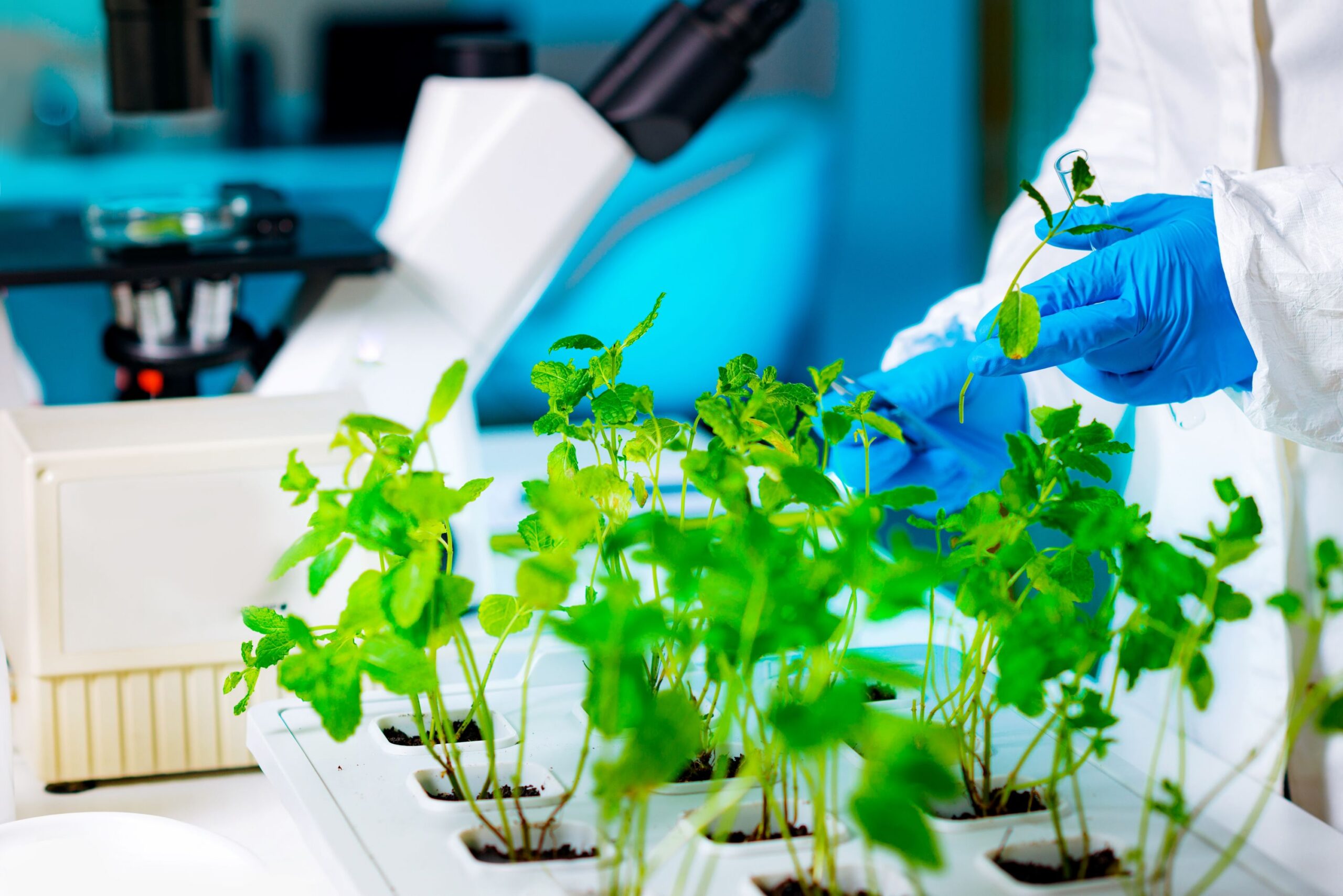
In June 2026, the European Parliament officially adopted new rules that are likely to have considerable implications for the competitiveness and sustainability of food systems across Europe. Agreed late last year with the Council of the European Union, they will establish for the first time a legal framework for the application of new genomic techniques (NGTs) across the 27 member states.
Essentially, the agreement opens a pathway towards the use of gene editing in plants, potentially leading to new fruit and vegetable varieties which — in the words of Denmark’s minister for food, agriculture and fisheries, Jacob Jensen — are “more resilient to climate change and require less fertilizers or pesticides.”
Covering a variety of techniques, NGTs can be used to adapt seeds in a laboratory in ways that resemble natural mutations or alterations achieved through conventional plant breeding. Unlike older forms of genetic modification, which often involved inserting DNA from another species, many gene-editing techniques make targeted changes within a plant’s own genome. The key to understanding the provisional agreement is the distinction between category 1 NGT plants, involving limited genetic changes considered equivalent to conventional breeding, and category 2 NGT plants, which would remain subject to stricter requirements.
Jennifer Kuzma, a professor of social sciences at North Carolina State University and co-founder of the Genetic Engineering and Society (GES) Center in NC, has decades of experience in biotechnology, including extensive work on gene editing and agrifood nanotechnology.
In Kuzma’s view, regulatory thinking around gene editing is “starting to converge” on both sides of the Atlantic following decades when Europe and the U.S. appeared to be pulling in opposite directions.
“The United States, historically, ever since the advent of genetically-engineered plant-based foods in the early 1990s, has been more promotional, much less precautionary than the EU, and more relaxed in a regulatory system,” she explains. “We’ve had more permissiveness for transgenic and now gene-edited products in the food supply, whereas the EU has had stricter regulatory and mandatory labeling standards. But now, in the past couple of years, the two systems seem to be converging more, particularly with the new proposal that just passed with the EU Council.”
In effect, Kuzma says the EU provisional agreement could lead to gene-edited foods that contain small changes equivalent to developments achieved using conventional plant breeding.
“If they come from a plant that is of the same species and could be made through conventional breeding, then it looks like it’s going to go through a more relaxed notification process, which is very similar to what we have been doing in the United States for a long time,” she says. “These are small changes, which could otherwise be made in conventional breeding, that are now being done by CRISPR-based gene editing.”
The Pitless Cherry Goal
An example of the growing importance of gene editing is a partnership announced in September 2025 between CRISPR specialist Pairwise and Sun World, the fruit variety developer and licensor headquartered in Bakersfield, CA.
The roots of the partnership can be traced back to Pairwise’s development of a seedless blackberry using a proven blackberry base variety BK-613, known for its flavor and commercial performance. The resulting plant is apparently more compact, allowing growers to plant at a higher density per acre, resulting in improved yield and production efficiency.

With greenhouse data indicating yield gains of around 50% per acre, field trials are already underway in the U.S. and Colombia. A grower-partner began small-scale commercial fruit sales in Colombia in late 2025, and limited U.S. sales are expected soon.
“Blackberries have been under-domesticated for a long time, and modern breeding with CRISPR is finally letting us improve them at a pace that matches what growers and consumers actually need,” explains Pairwise’s vice president of regulatory and government affairs, Dan Jenkins. “The compact trait is the first product out the door. A seedless blackberry is in field trials now and will be fruiting later this year. The same approach is opening doors in cherries, other stone fruits, and a range of specialty crops.”
Specifically addressing the question of cherries, Jenkins emphasizes that growing cherry orchards has long been a very time-consuming and capital-intensive business, with a new variety typically taking between 15 and 20 years to develop into an orchard.
The partnership with Sun World was specifically set up, he continues, with the goal of achieving pitless cherries — a long-term objective which, until now, has remained unachievable due to a combination of tricky biology and a timeline which makes the cost vs benefit calculus difficult.
Taking the work on the seedless blackberry as the foundation for a pitless cherry, Jenkins says the joint venture will seek to combine Pairwise’s editing capability with Sun World’s deep expertise in fruit breeding and commercialization.
“Sun World is a good fit for this work,” he says. “They built their reputation on convenience traits in fruit, going back to the seedless table grape in the 1970s and continuing through seedless mandarins, watermelons, and lemons. A pitless cherry is the natural next step.”
Regulatory Divergence
But while advances are gathering momentum in North America, the situation in Europe has long been far from ideal for gene editing’s advocates. One such advocate is the Agricultural Crop Licensing Platform (ACLP), an association established in 2023 by nine European plant breeding companies and trait developers with the purpose of encouraging and driving further innovation, including by making sure new plant traits produced using NGTs are available to breeders across the continent.
With resistance still strong to patents, particularly from Green lawmakers in the European Parliament, ACLP managing director Hélène Guillot says the association’s aim is to provide access to patented traits while at the same time reassuring regulatory authorities and mitigating fears surrounding patents. “In Europe, NGTs can be presented as ‘hidden GMOs,’ so we have NGOs very much against NGT who associate them with GMO,” she explains.
With the regulation adopted, Guillot anticipates an increase in NGT patents — a process which she cautions is unlikely to be straightforward. “It’s not like the U.S., where the discussion around patents is freer and more open. In Europe, there is a fear about patents, that they limit access to plants,” she says. “We have an approach where that which is alive should not be patented or should have strict limits on what is patentable.”
According to Kuzma, the divergent regulatory approaches have been criticized by many within the emerging industry. “If you talk to technology developers, they would say that the divergence has generally slowed down innovation and has had a stifling effect,” she says.
With much of the Western Hemisphere already viewing gene-edited crops as equivalent to conventionally bred plants, Jenkins at Pairwise speculates that, in some cases — provided it can be demonstrated there is no foreign DNA in the plant — pre-market approval may not be required at all.
“Given that we see most of the world converging toward the same conclusion — that these crops are the same as conventionally bred plants and not GMO — we are understandably optimistic about regulatory policy globally,” he notes. “Evidence speaks to innovation in markets that have had these policies in place for several years.”
In fact, Jenkins says a relatively high number of developers, crops, and traits have already moved through countries, such as Argentina and the United States, where the technologies are established and permitted.
Taken as a whole, Jenkins thinks the EU has done a “great job” in taking on the substantial task of creating a law that will allow new plant varieties created through the use of CRISPR to be treated as conventional and not GMO. The broader regulatory trajectory, he says, is convergent.
Overcoming Resistance
To counter the continuing level of resistance to gene editing among some sections of the population on both sides of the Atlantic, Kuzma advocates highlighting the benefits in terms of disease and drought resistance as some of the biggest positives. “Increasing food security, making plants more tolerant to climate change, pest tolerance as global pest populations change, conserving water — there’s a lot of global environmental benefits that we could have with gene editing,” she says.
Equally important, Kuzma adds, are the significant health benefits that next-generation biotech foods can deliver, from high-anthocyanin purple tomatoes to nutraceutical gamma-aminobutyric acid (GABA) tomatoes in Japan.
“I think right now companies are going to try and appeal to consumers because they kind of learned their lesson with the first generation of GMOs, which appealed more to farmers and seed tech companies,” she says. “Consumers didn’t see the benefits of reducing pesticide applications, so it looks like gene-editing companies are focusing more directly on consumers, with products such as seedless berries, non-browning apples and tomatoes with health benefits.”
Citing the European Council’s own statement about the benefits of a new gene editing regime, Jenkins says the new regulation will “improve the competitiveness of the agrifood sector and ensure a level playing field for European operators, while boosting food security and reducing external dependencies.
“They’ve also been clear about the sustainability case, noting that new genomic techniques can help do more with less by enabling new plant varieties that are more resilient to climate change and require less fertilizer or pesticide,” he adds.

Global vegetable seed company Rijk Zwaan, meanwhile, says it welcomes the new legislation, while emphasizing that no varieties in the current Rijk Zwaan catalogue fall under GMO regulations. “We think it is important that all stakeholder considerations are taken into account, and that there is a worldwide level playing field,” says spokesperson Vera Hoondert.
Far from being viewed as a threat, Hoondert says Rijk Zwaan considers new breeding methods a valuable addition to conventional breeding. “The principle of crossing and selecting the best crops based on visible traits has been practiced for more than 1,000 years,” she says. “Today, the technological possibilities have evolved significantly, and we understand much more about plant genetics.”
Given that gene editing has the potential to speed up the breeding process, Hoondert says Rijk Zwaan considers the technology a welcome addition to breeders’ toolboxes. At the same time, she emphasizes that gathering scientific knowledge about plants, genomes, their link to traits, and the agronomic performance of varieties around the world remains essential.
Hoondert is also keen to note that existing breeding methods already meet the needs of the value chain, with conventional crossing and selection methods enabling the development and introduction of innovative varieties for growers, retailers and consumers.
“These include varieties that are better able to cope with the effects of climate change, such as better heat tolerance and salt tolerance,” she adds. “New breeding methods merely shorten the time to market.”
From Regulation to Retail
Although the recent focus of Pairwise has largely been directed toward berries and cherries, Jenkins says it’s important to emphasize that the technology helps across all of agriculture and beyond. “We’re working with partners spanning row crops, specialty crops, horticulture, and livestock, as well as nonprofits and academic institutes,” he says.
“Recent licensees include Australia’s CSIRO, U.S.-based Ball Horticultural, Uganda’s Muni University, Mars, and Dutch vegetable-breeding company Enza Zaden, among more than a dozen others. What we learn in one crop transfers to the next, which is why our tools and traits compound in knowledge and application.”
Secondly, Jenkins says the proof of the effectiveness of gene editing lies with the products. Examples include the compact blackberry in Colombia, as well as the pitless cherry being developed with Sun World. “Each one is a step toward the same goal: making plants easier to grow and better to eat,” he adds.
Another example cited by Guillot at the ACLP is the development of a non-browning banana by Tropic Biosciences in the UK, a product which was included on TIME’s 2025 Best Inventions list. Expected to become commercially available in the U.S. and Canada during 2026, Tropic is also hoping to introduce a TR4-resistant banana by 2027.
However, within the European Union itself, Guillot predicts that NGT-derived products will not become commercially available until 2030 at the earliest. Although the Parliament has now approved the final text, Guillot notes it is likely to be late-2026 or early-2027 before the new regulatory system is finally in place.
As artificial intelligence makes gene-editing technologies easier to use, Kuzma says the range of possible plant modifications is expanding rapidly. “Think of a benefit, imagine it, and it probably could be done pretty soon,” she laughs. “I think we’re getting to the point where the confluence of AI and genomic technologies is going to take us another leap forward.”
With EU rules now set to be relaxed, Kuzma predicts that the speed of global development in the gene editing field will increase. “It’s always been pretty strong in the U.S. and some other countries, but there will be one less barrier for industries to get through. I really see this technology — especially for fresh produce which a lot of companies are focusing on — taking off exponentially. The United States and many Latin American systems are pretty permissive; the EU is now getting into line, plus Australia and China. I think things are going to become more permissive and allow these products to enter the market more quickly.”
Although Kuzma notes “multiple benefits” can be achieved in a more relaxed regime, she emphasizes the importance of bringing the wider public along through transparency and trustworthy regulatory systems.
But perhaps the final word should go to the legislation’s rapporteur in the Parliament, Swedish MEP Jessica Polfjärd. “By making these safe, science-based breeding technologies available, Parliament is delivering for European farmers, safeguarding our food security, and building a more competitive and innovative Europe.”