
Few names in the global fruit genetics industry carry as much weight as AMFRESH. Founded more than 95 years ago by the late Antonio Muñoz Alemán, the Madrid-based company has grown from a family business into one of the fresh produce sector’s most ambitious agriscience and commercial platforms, with a presence in more than 60 countries and more than 12,000 employees.
At the helm is Álvaro Muñoz, the founder’s grandson and the company’s CEO, who has helped drive AMFRESH through a period of rapid transformation. A graduate of ICADE Comillas Pontifical University in Madrid who later earned an MBA from Stanford University, Muñoz also spent time with McKinsey & Company before returning to the family business. That combination of family legacy, strategic training and long-term industry exposure has shaped his approach to a company that now sits across innovation, agriscience, genetics, IP licensing, farming, sourcing, packing and retail services.
AMFRESH’s 2023 acquisition of fruit breeder IFG, and the subsequent merger with SNFL to create BLOOM FRESH, strengthened the group’s position in fruit breeding, particularly in table grapes. Since then, Muñoz says, the ambition has not changed, but the plan has become more specific.
The company has been working on a “Strategic Ambition Plan” — a 10-year framework for where the Group wants to go, what it should build organically, where it may need acquisitions or partnerships, which categories it should pursue and how it should deepen its retail relationships across different markets.
More recently, Paine Schwartz Partners completed a minority investment in AMFRESH and its subsidiary BLOOM FRESH, extending a relationship that began with PSP’s investment in SNFL in 2019. The deal adds another layer to AMFRESH’s expansion story, as the Group looks to invest further in genetics, farming and new category development.
In the following interview, Muñoz discusses AMFRESH’s next stage of growth and innovation, its approach to acquisitions and partnerships, the new BLOOM FRESH Breeding and Technology Center in Murcia, the future of genetics, and why he believes the produce industry must remain hungry, humble and ready to adapt.
AMFRESH has grown through a series of major acquisitions and partnerships in recent years. How do you decide when it is better to acquire, when to partner, and when to build capacity internally?
Our preference is that if we can build, we build. It allows us to do it the way we want, to promote our talent, and to shape it almost from day one around our culture and capabilities.
But building and buying have one big difference: time. Sometimes we have the privilege of time to build. Other times, the capability simply does not exist and we have to create it ourselves. In the Dominican Republic, for example, when we started thinking about growing advanced genetics and attractive commercial varieties, especially grapes, there was no business there that we could use to accelerate that possibility. Either we built, or we did not do it.
So in that case, we built, and we partnered with people who wanted to build alongside us.
In other cases, we partner if that delivers the solution we are trying to create. This is a very quickly evolving market, and you need to combine many more elements than before to make something successful, viable and able to reach its final destination, which is to create a better product for a healthier consumer.
Almost everywhere we operate, geographically and by product type, we end up with a combination of these approaches. This is an ongoing process through which we continuously evaluate strategic options to achieve our ambitions. These opportunities become strategic choices once they demonstrate sufficient attractiveness and feasibility. We currently have a strong pipeline of more than 40 initiatives across all the business lines of the Group, spanning both organic growth opportunities and acquisitions.
Ultimately, the decision comes down to how we can get there faster, more consistently and with the right level of control, and always with a clear direction established by our strategic goals. When we buy, it is usually because taking more of an equity position allows us to make quicker management decisions and accelerate the development of that business or category.
How does the expanded partnership with Paine Schwartz support the kind of investment and growth you are planning over the next decade?
The announcement is really a reflection of a relationship and strategy that were already evolving.
As we were formalizing this 10-year plan, we realized there were many opportunities, but also that it would require a significant investment. It may be to accelerate innovation and R&D, expand farming with new genetics, or accelerate the transition from older varieties to new ones. It is a combination of things.
We have a long journey ahead of us, and we need to make sure we have enough gas in the tank to get there. We want to grow, but we want healthy growth, and here I mean financial health. We do not want to make decisions that could put the future of our Group, or the people working in the group, at risk.
Paine Schwartz has been with us for more than 7 years now. We know them well, they know us well, and they know our management style, our teams and how we operate, and we know the differential capabilities that PSP can provide to us.
In the end, we concluded having a reference partner alongside us made sense not only financially, but strategically. They bring additional financial capacity as well as different perspectives on the opportunities ahead. Some of those opportunities we know well. Some are newer territory for us.
If we are talking about new categories, it is good to have their experience, with skin in the game alongside us. It makes us better informed and quicker learners than if we had to do it solo.
I’d like to talk about the new BLOOM FRESH Breeding and Technology Center. What makes it such an important step?
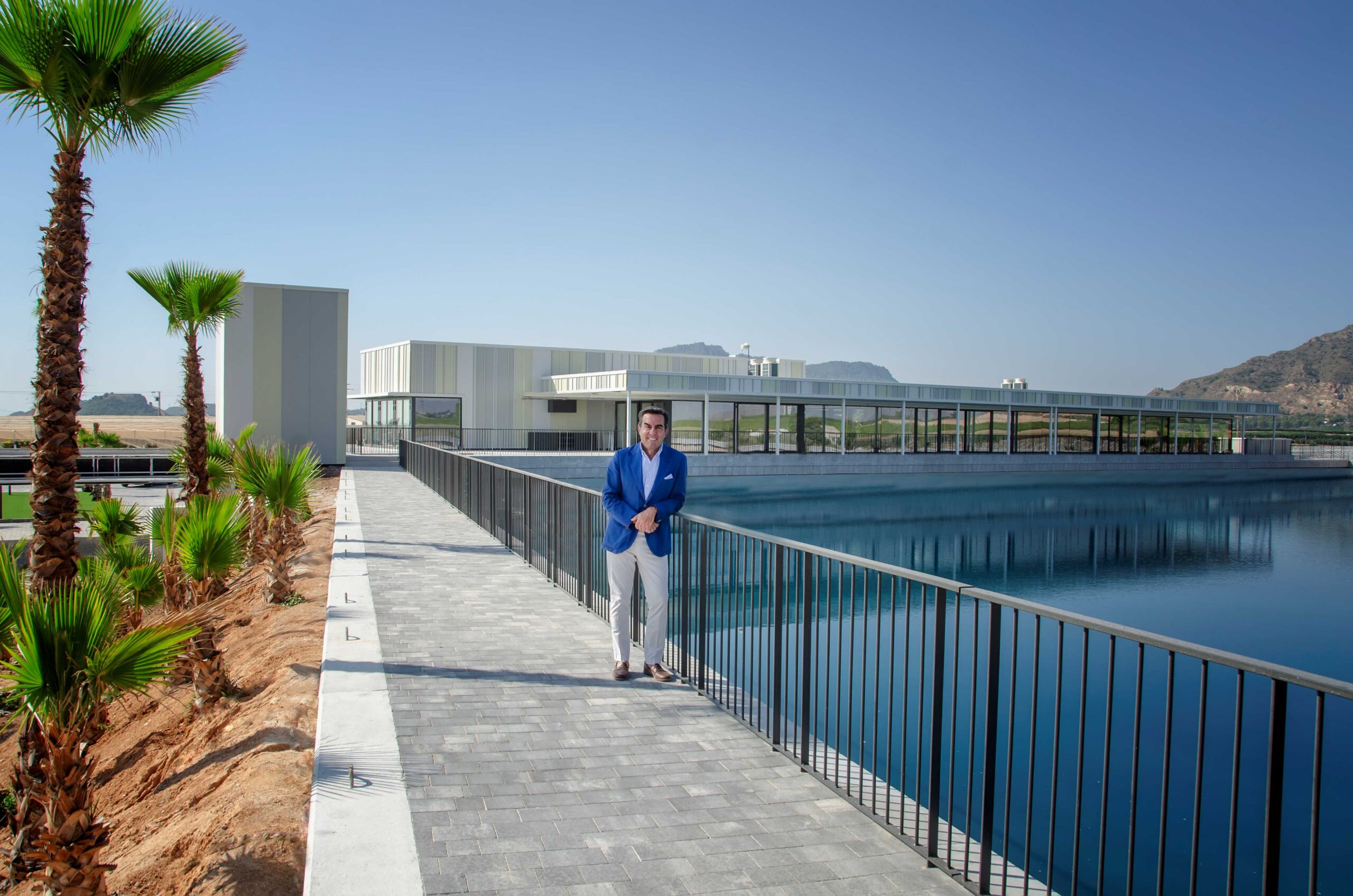
I can tell you, without a single doubt, that once we open, this will be the best center of its kind in the world.
I have spent 25-plus years visiting R&D centers around the world. Maybe I have not seen 100%, but I have possibly seen more than 80%. I have not seen anything comparable to what we are building here. We started with a blank page. We asked ourselves: if we could build a place where the future of breeding will be shaped, what would it look like? That is Blanca. We have designed it around the science we know today, the possibilities we can already see ahead of us, and the technologies we cannot even imagine yet. It is like comparing an iPhone 14 with the iPhone 18.
The good thing about this center is that we designed it with everything we have learned over the last 50 years: 25-plus years in SNFL, 15-plus years in GENESIS FRESH, and 25-plus years in IFG. Not only did we buy IFG, but we also brought together the history, learning, extensive and unique gene pool, knowledge, and breeding capabilities of IFG.
Allow me to make a comparison: we wanted to create Disneyland for our innovation and scientific teams. We told them: “Tell us everything you need, and everything you think you are going to need in the next 15 years. And if you do not know what you will need in 15 years, imagine it, because we want to include it.”
When you come and see it, you will see that it is huge. We need room for technologies that may not even exist yet.
The building, the labs and the whole infrastructure are designed to embrace the huge wave of new agtech that is coming. We want to be an innovation hub, a place where different talent, science, creativity, disciplines and technologies can come together.
BLOOM runs a non-GMO breeding program focused on working with nature and wisely accelerating the possibilities nature gives us. That is where we want to be.
That means developing solutions that help people eat healthier and better, while addressing increasingly extreme conditions, from climate pressures to pests and disease and ultimately strengthening the resilience of our global food system.
With the EU moving toward a new framework for certain new genomic techniques in plants, how do you view gene editing, and is it something AMFRESH is currently using or considering?
Gene editing is very different from genetic modification. Gene editing is one of several tools grouped under what we call precision breeding – a broader family of approaches that can accelerate changes that could also occur in nature through natural variation or conventional breeding.
We see precision breeding as a potential way of accelerating what nature and traditional breeding already do, but with greater precision targeting traits and objectives that would be very difficult to address through traditional breeding. That is an important distinction for us. Our interest is in technologies that work with nature and allow us to accelerate its possibilities responsibly.
Whether that is my answer in five or ten years will depend on what the science delivers, what regulation permits and what consumers embrace. There are things happening that could be quite attractive for the future in terms of health, sustainability, water stress and climate conditions that are becoming less predictable.
My big question is how we are going to feed the world better, be sustainable, be efficient, have healthier products and better prices for consumers if we do not responsibly explore some of the technologies available to accelerate what nature allows us to achieve.
So, in summary: we are not using precision breeding today. But yes, we are looking into it and learning, along with many other technologies. And we will see if, and how, we might incorporate it if we decide there is merit in it.
GENESIS FRESH has been developing new citrus concepts such as ONIX and The ALIZZA Fruit. Is citrus entering the kind of varietal and branding cycle that table grapes went through?
I believe citrus is entering a new era, although it will follow its own path. Table grapes demonstrated how natural breeding could completely transform a category by delivering better flavor, new textures, distinctive eating experiences and stronger consumer recognition. Citrus has the same opportunity, but its potential goes even further.
For growers, resilience and sustainability have become two of the highest priorities. Around the world, we are seeing increasing pest & disease pressure, changing climatic conditions and greater pressure on natural resources. Breeding has a critical role to play in developing varieties with greater resilience, productivity and enhanced tolerance to pests and diseases, helping secure the long-term future of citrus production.
At the same time, consumers continue to expect more from fresh fruit. They are looking for healthy snacking with exceptional flavor, attractive appearance, distinctive pigmentation, juiciness and texture, and ultimately fruit that gives them a reason to come back and buy again.
The opportunity goes well beyond launching a successful new variety or building a new consumer brand. Our ambition is to help shape the future of citrus by developing new varieties that give growers greater confidence to invest, enable retailers to differentiate and grow their categories and inspire consumers around the world to choose more fresh citrus because the experience is simply better. This is precisely the category revolution that GENESIS FRESH has begun to deliver internationally. Through a portfolio of exciting branded concepts and a unique collection of premium, easy-peeling mandarin varieties, GENESIS FRESH is redefining the citrus experience and challenging the category as we know it today.
A couple of years ago you announced the acquisition of Inka’s Berries in Peru. Could you tell me more about your plans with blueberries?
We had been collaborating with Inka’s Berries for about three and a half years, which gave us a strong understanding of their germplasm and breeding program. That led us to explore the possibility of combining Inka’s Berries with BLOOM FRESH, not only for sublicensing in specific territories, but also by leveraging BLOOM’s global scale to accelerate the development and commercialization of their genetics.
This investment is largely focused on developing differential low- and no-chill varieties. Breeding and varietal rollout take time, but blueberries are a category evolving very quickly, with significant potential for innovation. We believe the combination of the blueberry genetic pool that we are building and BLOOM’s scale gives us a very exciting platform for the future.
European retailers are under pressure on price, sustainability, reliability and differentiation. What do the best retail partnerships look like today, and how are retailer expectations changing?
Today, top retailers are looking for confidence and differentiation. They want confidence that supply will be available despite increasingly unpredictable growing conditions. They want confidence that quality will remain consistent across the season. They want partners who understand their business, anticipate challenges and bring solutions before problems arise.
Innovation remains important, but innovation alone is no longer enough. Retailers expect innovation that is commercially relevant. New varieties must deliver stronger category performance, encourage repeat purchase, reduce waste, improve operational efficiency and create meaningful differentiation for consumers.
The strongest partnerships are built around trust and shared objectives. We spend a great deal of time discussing where categories should be in five or ten years, how consumer behavior is evolving, how breeding, technology, science and a resilient and efficient supply chain can help retailers achieve those ambitions. That long-term alignment is far more valuable than negotiating the next season alone.
AMFRESH is a family company, but it is now operating at a global scale. How do you preserve the advantages of a family business while building the systems needed for a company of this size?
We think about it almost every day. This is not a slogan. The idea is to make everybody feel part of the family, no matter where we are or how we grow, but that does not happen automatically. You need time, care, guidance and leadership.
We like to act as a family business by organizing ourselves in smaller businesses that behave more like independent entrepreneurial businesses than divisions of a bigger group.
We want people to feel they are having an impact. We embrace and promote decision-making like crazy. People should try. If you fail, try again. Please do not fail 100 times, because then we have a problem. But we are close enough to the business to see when that happens and help.
Our reaction to failure is never, “This project did not deliver the expected results, so let’s move on.” We try again and again. If things still do not work, then obviously we need to act. But we are patient on purpose when it comes to developing and retaining talent. That allows our talent to be entrepreneurial: to build, think, test, trial and learn.
We also push responsibility downwards, so people really feel responsible. We always say that a problem is yours if you do not share it, but it is ours if you share it. So please share it, because then we are there to help.
I love to tell our teams: remain hungry, stay humble. If we lose that, we are out of business.
Can we keep that as we grow? Yes, I think we will. It does not happen automatically, but our talent is our No. 1 treasure. That entrepreneurial spirit has been part of AMFRESH from the beginning, and preserving it as we grow is incredibly important to us.
I like to think AMFRESH should be seen from outside as a great business to work in, but also as a mature startup that has never lost its entrepreneurial spirit. Let’s never lose that if we can.
What is your vision for the future of the produce industry?
I believe the next decade will be the most transformative period our industry has ever experienced. Powerful cross-industry trends are reshaping the competitive landscape: technology, with AI and advanced analytics transforming every step of the value chain; talent, as attracting, developing and retaining the right capabilities becomes a critical competitive advantage; consumer behaviour, with increasing demand for healthier, more convenient, sustainable and personalised products; and industry dynamics, driven by consolidation, evolving retailer expectations, geopolitical uncertainty and changing global supply chains.
For the first time, natural breeding is being accelerated by artificial intelligence, genomics, biotechnology, robotics and advanced data science. These technologies are not replacing nature; they are working in partnership with us to accelerate the transformation of our genetics better than ever before. They allow us to develop healthier, more flavorful and more resilient fruit, while helping growers adapt to climate change, use fewer natural resources and produce food more efficiently.
But technology is only part of the story. The real transformation is that society is redefining the role of food. Health is becoming one of the world’s greatest priorities, and I firmly believe that health is our greatest wealth. Over the next fifteen years, I believe the boundaries between food, health and science will continue to converge. Consumers will increasingly expect food to actively support their health. Retailers will invest in categories that create long-term value through nutrition and innovation.
Sustainability can no longer be measured by promises; it must be demonstrated through evidence and measurable impact. Environmental, social and governance (ESG) should become the baseline, not the differentiator. Success will be defined by our ability to reduce food waste, improve biodiversity, optimize water use, lower environmental impact and strengthen farming communities, while producing healthier food for a growing global population.
I also hope our industry earns the recognition it deserves. Fresh produce should be recognized as one of the world’s most advanced science- and technology-enabled industries.
The future will also belong to those who collaborate. No single company can solve the challenges of climate change, food security or public health alone. Breeders, growers, retailers, universities, technology companies, governments and healthcare organizations all have a role to play in shaping the future of food.
What piece of advice would you give to the wider produce industry?
This is a super exciting industry, full of what some people would call threats and what I like to call opportunities.
There are many changes around us, whether that is consumer trends, technological possibilities or shifts in labor availability, which is becoming a huge factor.
But the reality is that we sit in an industry that feeds the world. We have a market that never sleeps. Other things come and go, but our industry is always there. Having that stable, assured demand is a luxury that people inside the industry sometimes take for granted.
So the question is: how do you remain active, nimble, invested, and ready to lead as demand changes?
Remain humble. Learn every day. Stay hungry. Do it better every day.
The demand is there. We just need to understand it, anticipate it and be there first, or among the first, with the best product at the right cost, in a responsible and sustainable way that makes sense for the business and for the long term.