
The European fruit and vegetable industry is not short on strengths. It is world-renowned for its high safety standards, sophisticated supply-chain logistics, strong producer organizations, advanced breeding programs, and technological and sustainable innovation.
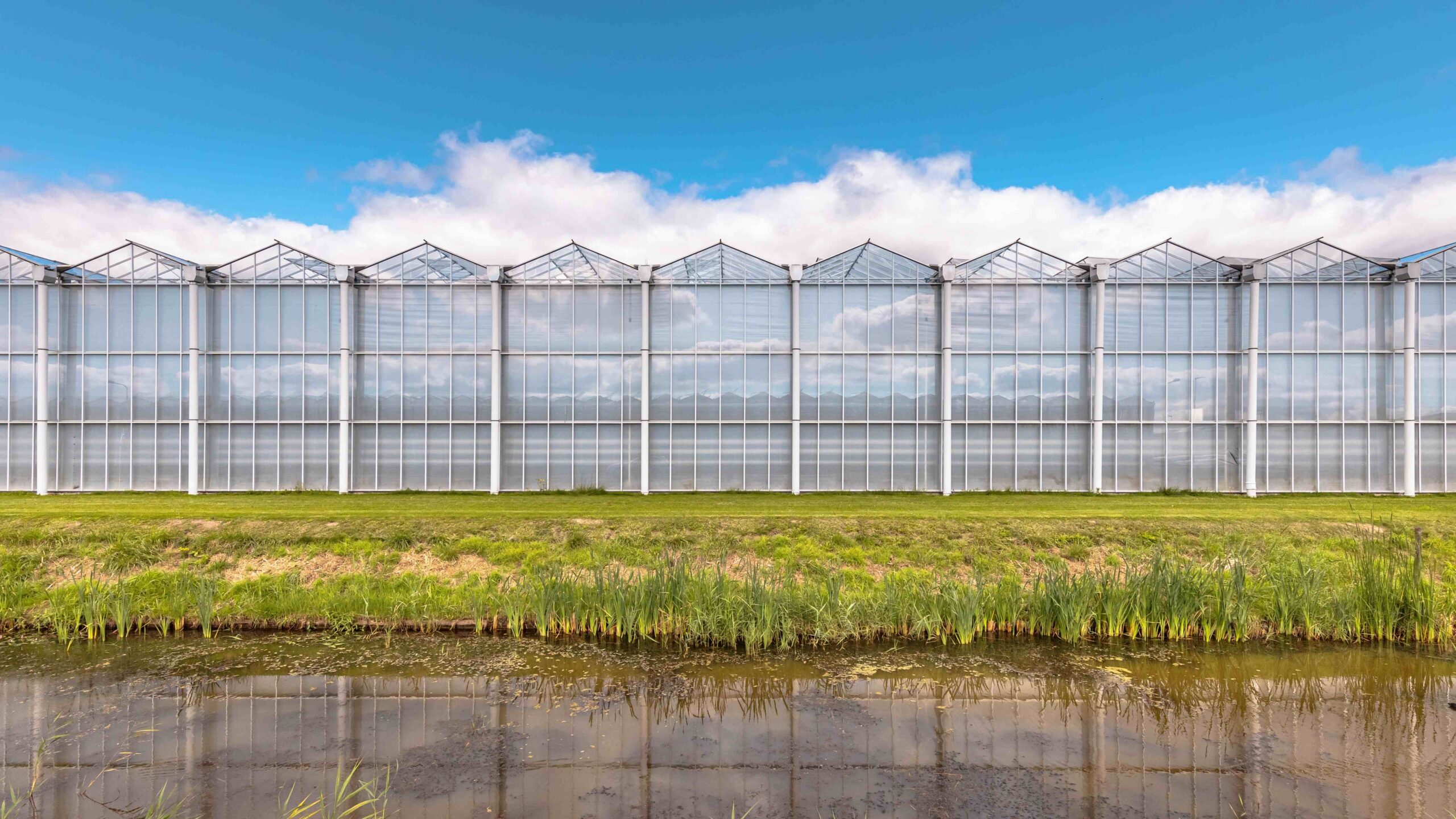
It also has diverse regional climates, allowing production of a wide variety of crops, from apple orchards in the Italian Alps to table grape vineyards in southeastern Spain and high-tech vegetable greenhouses in the Netherlands. Few regions can offer such a broad mix of tradition, scale and technical expertise.
To add to all this, it has approximately half a billion consumers, many of them relatively affluent, right on its doorstep.
But many growers are finding a widening disconnect between the prices they receive and the rising costs required to produce to those standards. European growers are expected to meet some of the world’s highest standards on quality, safety, labor, sustainability and traceability, while also facing higher costs, scarcer workers and more volatile weather.
Retailers are under pressure too, with many consumers still watching prices closely following years of high inflation, even as higher-income shoppers show more willingness to trade up for quality.
Yet the same pressures may also force the sector to do what it has often done well: adapt, invest and find new ways to create value in a demanding market. Increasingly, future growth may depend on producing more reliably and using technology, partnerships and product innovation to create clearer value for retailers and consumers.
Several of the industry’s advantages are structural rather than temporary. “In my view, Europe’s competitive strengths are related to quality, food safety, and sustainability,” says Cindy van Rijswick, global head of crops at RaboResearch Food & Agribusiness, the research arm of Netherlands-headquartered cooperative bank Rabobank. “Next to that, Europe is still leading in terms of knowledge and innovation.”
Van Rijswick also sees Europe’s diversity of crops, company types, ownership models and business structures as a strength.
Furthermore, she notes that Europe’s cooperative and producer-organization structures allow smaller companies to gain scale, share risk and invest jointly, without needing to become fully integrated corporate groups.
Patrizio Neri, president of Macfrut, the Italy-based international trade fair for the fruit and vegetable supply chain, sees Italy as one example of that broader European strength. “Its key strengths lie in the quality of production, the diversity of its offering and its ability to combine innovation with tradition,” he says.
Armin Rehberg, chief executive of SanLucar, a global fruit and vegetable brand headquartered in Valencia, Spain, with a German head office and logistics center in Ettlingen, says Europe’s strengths include the short distance between field and point of sale, which helps preserve freshness, and strong consumer appreciation for quality.
For José Velasco García, CEO of Agronativa (El Ciruelo), a large Murcia, Spain-based grower best known for table grapes and stone fruit, Europe also benefits from changing eating habits, with consumers increasingly focused on healthy eating and looking after their bodies.
A Tougher Market
But the same market that has helped create Europe’s efficiency also limits the ability of companies to recover their rising costs. “The European fresh produce sector has to deal with high standards but very low willingness to pay,” says van Rijswick.
That creates a constant tension between what the market demands and what it is prepared to pay for. Van Rijswick also notes that, unlike in the U.S., there are hardly any branded products in supermarkets’ fresh produce aisles. As a result, retailers often have more control over how value is presented to consumers and who benefits from it. A loose banana, after all, has less room for storytelling than a cereal box.
The broader grocery market is also under pressure, according to Vera Jotanovic, chief economist at EuroCommerce, a Brussels-based organization representing Europe’s retail and wholesale sector.
“The sector is currently defined by structurally low growth combined with sustained cost and margin pressure,” she says. “At the same time, consumer behavior is becoming more polarised, with low-income shoppers remaining highly price-sensitive while higher-income shoppers are trading up to quality.”
Jotanovic says grocers are responding through productivity, scale, private labels and selective investment in areas such as supply-chain resilience, technology and targeted sustainability.
For suppliers, this raises the bar. They cannot rely only on premium products, but also need to help retailers keep shelves stocked, control waste and offer products that feel worth the extra cost.
At the production end of the chain, climate is making that task harder. Neri of Macfrut notes that climate is one of the clearest forces reshaping the sector. “[Climate change] is affecting production capacity: in Italy, output has declined over the past decade, from 26 million tonnes of fruit and vegetables to 24.7 million tonnes,” he says.
Italy is not an isolated case. Rehberg of SanLucar says extreme weather is forcing companies across Europe to develop more resilient sourcing models.
“Spring frosts, heatwaves, droughts, and floods are creating significant uncertainty in production,” he says. “To avoid shortages, it is essential to accelerate structural adjustments, diversify sourcing, and build more flexible supply chains.”
Labor and regulation add to the pressure. Van Rijswick says the sector’s reliance on migrant labor is becoming more difficult as Europe’s population ages and social resistance to migration increases.
Velasco of Agronativa notes that labor pressures and supermarket concentration are already speeding up decision-making. “In this context, the ability to adapt will determine the future of companies,” he says.
Neri also warns that restrictions on plant protection products are creating challenges for yields, and that sustainability has to be economically workable as well as environmentally necessary. “While it is essential to adopt an approach centered on environmental sustainability, it is equally important that sustainability is also economic,” he says. “The two must go hand in hand.”
A Higher-Value Future
Over the coming years, the search for value is likely to become more practical. Higher prices alone may not be enough. The companies best placed for the next phase will be those that can connect technical knowledge with a clearer understanding of what retailers need, what consumers value and what growers can realistically deliver.
In van Rijswick’s view, the clearest routes to value creation are “flavor, quality, freshness, consistency.” These are not new ideas in fresh produce, but they matter more when retailers are trying to cut waste, protect margins and keep shoppers coming back.
That points to a more investment-led model. Greenhouse and protected production, robotics, post-harvest automation, biological crop protection and new varieties can all help improve productivity, manage risk and make better use of land, water and labor.
For Spanish growers, Velasco says competitiveness will depend on precision and service as European companies face lower-priced offers from non-EU countries.
“In Spain, fruit and vegetable companies need to be increasingly precise and offer a higher level of service in order to remain competitive against possible lower-priced offers from third countries,” he says.
Rehberg of SanLucar sees growth in high-value crops, including berries, kiwifruit, grapes and tropical fruits, as consumer expectations around fresh produce continue to evolve.
“Consumers want more than just fresh produce; they want convenience, new varieties, and added value,” he says. “Concepts like ready-to-eat formats, new fruit varieties, and innovative product presentations will continue to differentiate brands and create new growth opportunities.”
Retailers are also looking for growth beyond the traditional weekly shopping trip. Jotanovic of EuroCommerce says fresh categories face the same structural pressures as the wider grocery sector, including rising costs, supply-chain volatility and low overall volume growth.
“At the same time, they are closely linked to key growth trends such as health, premiumization, and especially convenience,” she says, pointing to ready-to-eat and food-to-go, which are expanding as grocers try to capture new eating occasions.
Neri of Macfrut also sees innovation playing a larger role, enabling improvements in productivity, helping address environmental challenges and encouraging new forms of collaboration across the supply chain.
Velasco says the same logic is shaping how Agronativa moves forward. The company has been reassessing costs, market changes and consumer trends, while adapting its varieties and investing in its own farms to simplify the chain and move more quickly.
“When something does not work, we do not wait: we evolve and switch to varieties that we consider more suitable,” he says.
That kind of adaptation may become more important as Europe’s produce sector tries to protect its strengths without relying solely on higher prices. It points to a future in which technical knowledge will need to be matched by a sharper sense of what the market actually rewards.
As van Rijswick notes, “Europe’s land and labor base is constrained, but its knowledge base is not.” For a sector built on quality, variety, safety and efficiency, the next phase may depend on using that knowledge to make those strengths count for even more.