
Europe’s table grape industry still benefits from one of its strongest assets: proximity to the continent’s consumers. But that advantage is narrowing as regulation, higher production costs, shifting demand and uneven postharvest performance reshape competition.
Spain and Italy can remain major suppliers, but only if the sector treats technical modernization as a commercial priority.
The policy environment is one part of the challenge. European Union regulations are often poorly aligned with agricultural realities in southern Europe, particularly Spain and Italy. The same tension, however, can be seen across European agriculture.
These rules can discourage investment and, under the banner of sustainability, sometimes overlook the economic viability of agricultural production. In his 2023 book La Venganza del Campo (The Revenge of the Countryside), Manuel Pimentel Siles argues that urban policymaking, reinforced by Brussels’ political echo chamber, too often reflects the positions of NGOs and other groups removed from the sector’s technical and scientific realities.
Many of these regulations have no equivalent in competing countries. At the same time, migration has not resolved agriculture’s persistent labor shortages.
The energy transition undertaken by the EU and its current economic slowdown amid geopolitical uncertainty are key factors in production costs. This has been compounded by higher prices for agricultural inputs, including plastics, fertilizers and crop-protection products. Together, these pressures expose Europe’s dependence on external sources of energy and, to some extent, defense.
In short, by regulating more than enabling or encouraging innovation, Brussels risks weakening the EU’s productive capacity and pushing entrepreneurship toward the U.S., China and other parts of Asia.
The aging of Europe’s farmers is an indisputable fact, documented in numerous EU publications. Rural depopulation has not been offset by immigration, and young people do not see farming as a sector with a future. Yet the cultural foundations of many European countries lie in the countryside. Current demographic trends offer little reason for optimism.
The concentration of retail groups, many of which now buy directly from producers, has also created a severe imbalance in bargaining power. The two sides increasingly behave as adversaries within the value chain rather than as indispensable strategic partners.
The Operating Environment
Investment funds have yet to prove that they can bring lasting stability or greater professionalism to agriculture; in some cases, their exit has been as rapid as their arrival. This trend has coincided with greater vertical integration, bringing production, packing, marketing and sometimes exporting under the same ownership.
Consolidation is not confined to the EU, but it has made conditions harder for small and midsize growers, while cooperatives have not always provided the protection or bargaining power their members expected.
The commercial environment has changed as well. The old assumption that Spanish and Italian growers were only three or four days from their main markets no longer tells the full story. Distribution centers impose complex specifications, logistics are less predictable and sales to consumers are spread across a wider range of channels. Proximity still matters, but it is no longer enough on its own.
Consumers have also become more cautious after successive economic and geopolitical shocks. The pandemic, the war in Ukraine and disruption to major shipping routes have contributed to a broader sense of uncertainty. Inflation and weaker confidence make shoppers more selective, while the rise of smaller and one-person households is changing how much they buy and how they plan purchases.
For the table grape sector, these shifts have practical consequences. Production strategies must be assessed more rigorously, with closer attention to profitability, commercial viability and the balance between yield, quality and fruit condition. The sector also needs to give this more cautious consumer clearer reasons to buy.
Varietal Change and New Production Models
The past 20 years have brought an extraordinary varietal transformation. Embryo rescue, developed in the 1980s by David W. Ramming and Richard L. Emershad, together with marker-assisted selection (MAS), helped establish the foundations of modern table grape genetics. Mendel’s principles, dating back to the 1860s, remain the basis of hybridization, but breeders can now produce varieties with widely differing characteristics in flavor, texture, size and color.
Whether this progress has been market-driven or production-driven is open to debate, although the evidence points more strongly to the latter. Growers have sought more manageable varieties spanning early to late cycles, while breeders recognized a commercial opportunity in a segment whose needs had not been fully addressed.
The process has involved considerable trial and error. Many new varieties have made a major contribution, but some are less robust than traditional cultivars, particularly in the bunch stem, or rachis, and lack clearly defined management protocols for different agroecological settings. Growers have financed much of this experimentation and also bear some responsibility for the planting fever in which almost anything new proved seductive.
Production has meanwhile moved toward earlier or more extreme regions: northward to South Africa and Namibia’s Orange River region and Chile’s Copiapó in the Southern Hemisphere, and southward to Murcia, California’s Coachella Valley and Sonora in the Northern Hemisphere. Tropical viticulture has also expanded in areas such as Nashik in India, Brazil’s São Francisco Valley, Piura and Ica in Peru, and Jalisco in Mexico.
The result is an almost continuous 52-week supply. Supermarkets increasingly seek year-round programs built around one or two core seedless varieties in each of the white and red categories. With climate risk, varietal turnover and unstable logistics all increasing, established calendars and practices are no longer enough.
Consumers, especially those buying white grapes, have gained access to larger, crisper and more palatable fruit. When shelves sell through more quickly and losses fall, retailers identify which varieties improve rotation and ask for more of them. Over time, those names become familiar and demand begins to build. Today, those varieties increasingly have recognizable names.
Physiology, Postharvest and Genetics
Modern varieties offer larger berries and greater crispness, but many are also more physiologically sensitive than traditional cultivars. Common issues include greater rachis dehydration associated with vapor pressure deficit, higher respiration rates, sensitivity to ethylene and enzymatic oxidation, and browning associated with polyphenol oxidase. For consumers, however, the result is simpler: a brown stem that looks unappealing regardless of berry quality.
These processes are distinct but connected. Physical dehydration can trigger physiological and metabolic browning, leaving brown rachises that are among the most common causes of market claims.
Botrytis cinerea remains a principal postharvest disease. Control begins in the vineyard through canopy management, ventilation and well-timed treatments, particularly around flowering.
After harvest, SO2 remains important through in-box generator pads, but it cannot compensate for weak temperature management. Problems associated with Penicillium spp. are also becoming more significant. Even at a pulp temperature of 0 C, both Botrytis cinerea and Penicillium spp. can continue to grow slowly, although their development is significantly reduced compared with higher temperatures. Temperature management can reduce risk, but it does not eliminate it.
Spain and Italy therefore need stronger cold-chain discipline, including faster pre-cooling, more precise temperature maintenance, improved cooling-tunnel design and packaging suited to effective air circulation around the fruit.
Technical targets should include a temperature differential or delta ΔT of no more than 2 C unit of degree, pulp temperatures ranging between a low of -1 C and a high of -0.5 C, and pre-cooling within 12 to 14 hours, or less where possible, to reduce vapor pressure deficit. Fixed-weight 500-gram packs also require reassessment where berry sizes reach 23 to 24 millimeters or more, because larger berries may not fit well in those selling units.
Genome editing through CRISPR-Cas9 could complement Mendelian breeding, molecular markers and embryo rescue by allowing more precise changes to strong existing material.
It also raises legal and intellectual-property questions, including the status of edited varieties whose original protection has expired. In June 2026, the EU adopted a new framework for plants developed using new genomic techniques; how that framework is implemented will help determine whether European or international breeders can keep pace with competing production regions.
Harvest, Stress and Quality
Maturity indices cannot be based on Brix alone; they should also include total titratable acidity (TTA) and the Brix-to-TTA ratio.
This is especially important for white varieties derived solely from Vitis vinifera, because postharvest life falls sharply when TTA drops below 0.5%. More research is needed, but public universities and research centers may be reluctant to study issues linked to privately owned varieties.
Harvest standards set by breeders and supermarkets have proved inconsistent in tropical and subtropical regions and in marginal Mediterranean production zones, particularly early-growing desert and hot-arid areas. Climate uncertainty is a major factor, especially when unusually high temperatures of 35 C to 45 C occur during sensitive stages of ripening and cause abiotic stress. Warm nights above 18°C are particularly damaging, as acidity can fall sharply while Brix remains almost unchanged.
Yields above 40 to 50 metric tons per hectare can increase claims and reduce shelf life, especially in early and midseason varieties.
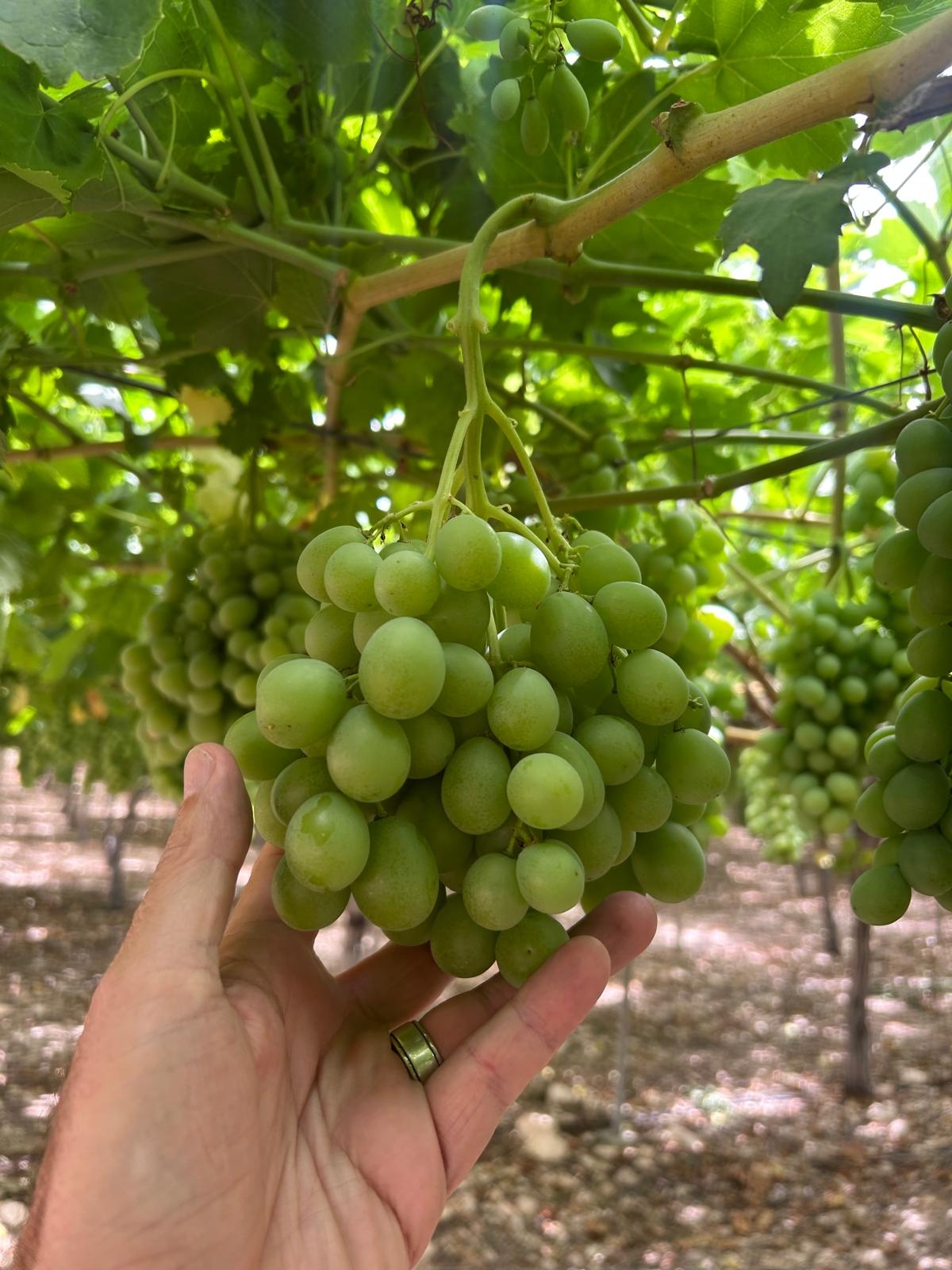
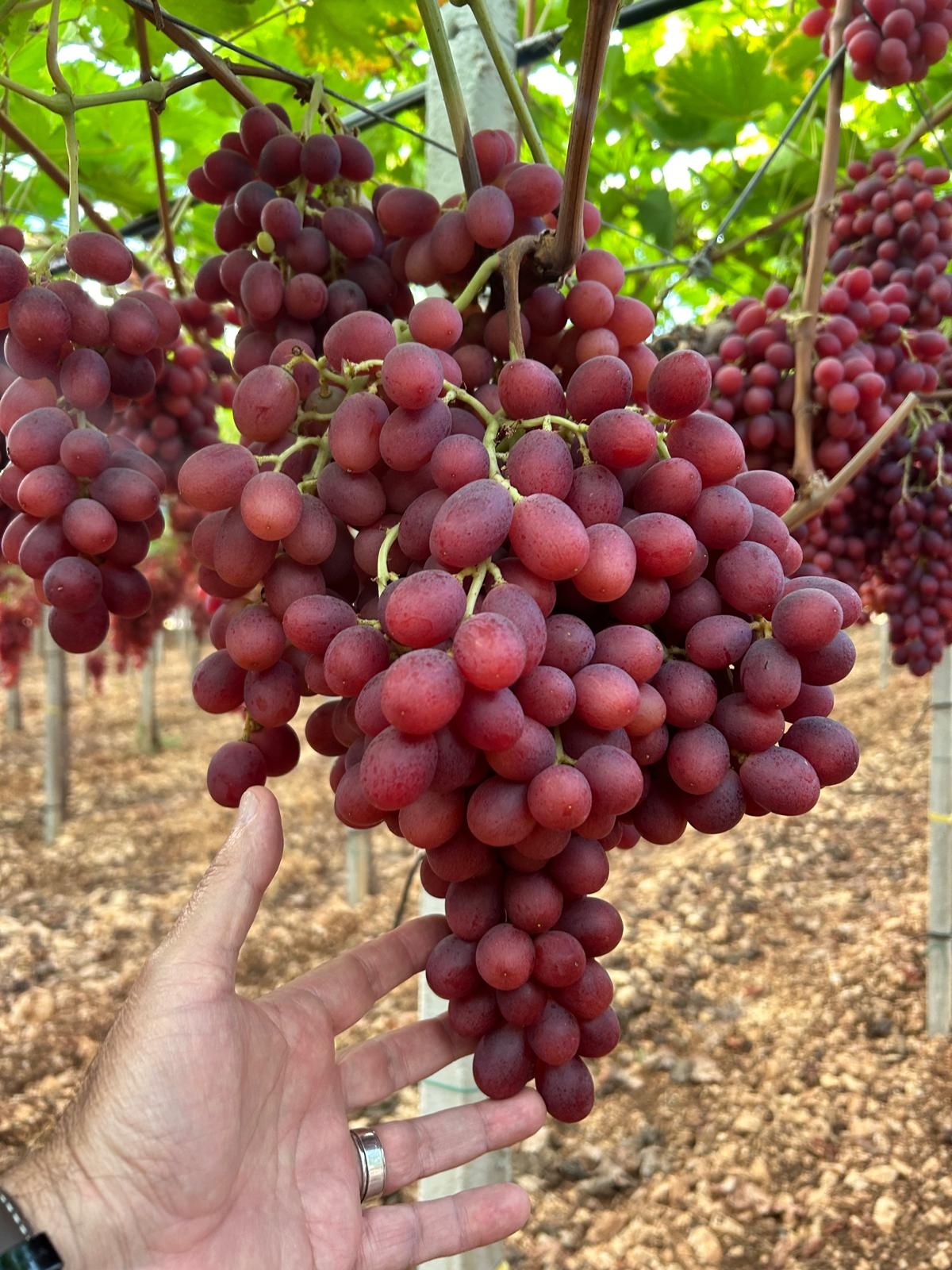
A bunch should be understood as a collection of individual berries, each with its own variation in Brix and TTA. In this sense, the berry is the fruit unit. Excessively large bunches containing more than 120 berries increase variability in these indices and reduce consistency in condition and shelf life, especially in white seedless varieties. This is the logic behind Italy’s grappolini, or small-bunch, approach.
Longer term, the growing adoption of GLP-1 therapies could create an additional opportunity for grapes as a nutritious, convenient snack.
Conclusion
Taken together, these issues show that Spain and Italy still have a proximity advantage, but it is no longer sufficient on its own. Both require a far-reaching technical update based on science rather than custom. The industry needs to:
- Review field production techniques
- Redefine maturity indices with breeders and growers
- Align maturity standards with measures of palatability
- Modernize the cold chain and packaging, particularly consumer packs
- Introduce technology systematically, including basic field and postharvest monitoring tools
The European model may need to draw lessons from Peru and Chile, where ocean transit alone can take 20 to 45 days, or from California, where harvests can be staggered through short- or long-term storage to smooth peaks in local market arrivals.
The long-term viability of the table grape business depends on technical, production and commercial discipline. Brussels has a role to play, but it cannot lead this transformation on its own. The sector must also take responsibility for modernizing production, postharvest handling and commercial standards. It would also benefit from stronger shared data systems and more coordinated producer representation, areas where countries such as South Africa, Peru and Chile often provide more accessible statistics and clearer industry-level information.
- The views expressed in this article are the author’s own and do not necessarily reflect those of his employer.