
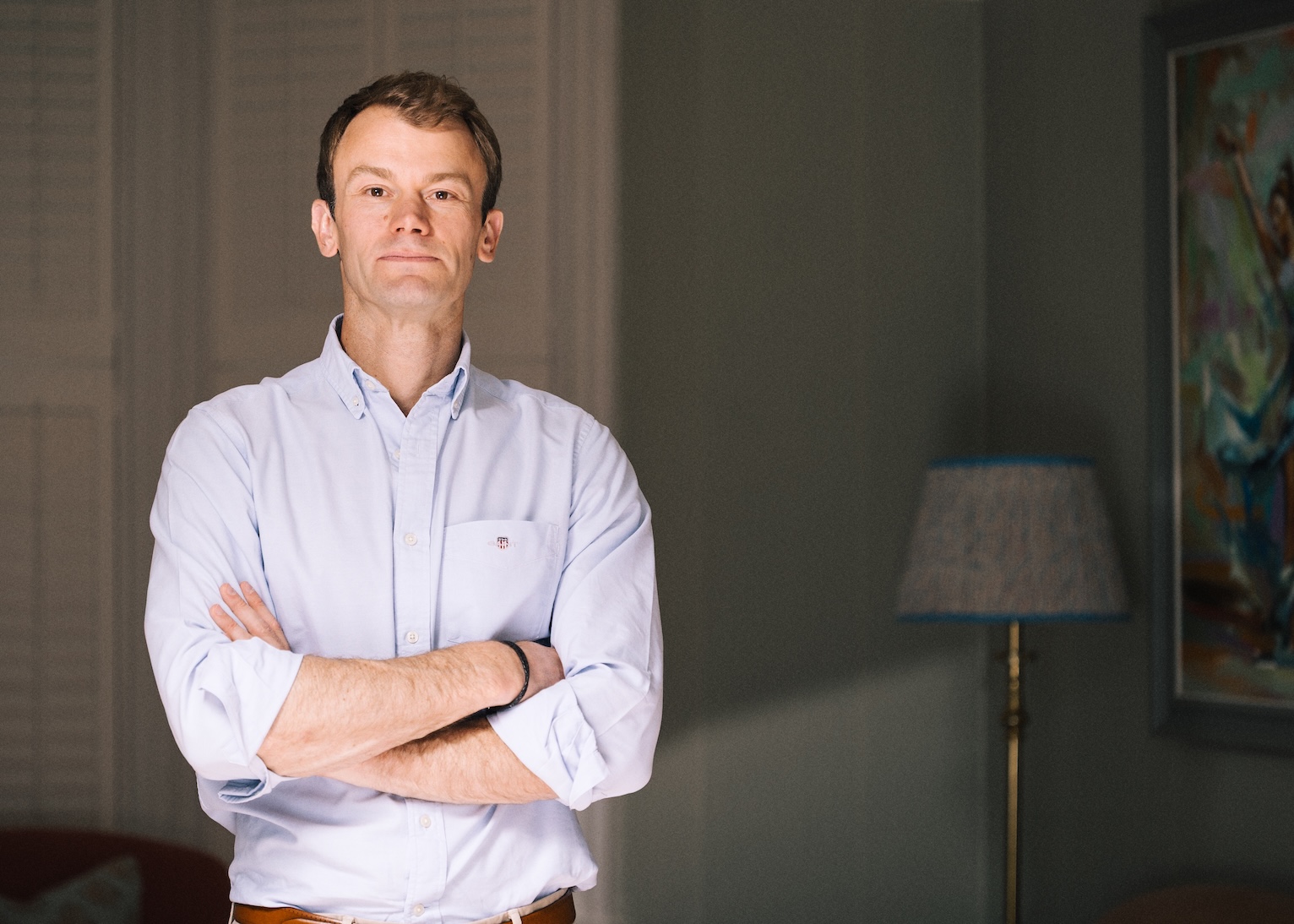
Tesco Produce Category Director Tom Mackintosh’s route into fresh produce began long before he joined the UK’s largest supermarket chain, a business that remains the clear leader in British grocery, with a market share of around 28%.
Raised from the age of five on a farm in southeast England, Mackintosh grew up around sheep, pedigree cattle and arable crops, with fresh produce also never far from family life. His stepfather, Leonard van Geest, farmed commercial salad crops in Lincolnshire as well as running the family business in prepared salads and importing bananas from the Caribbean.
“I very much grew up in the fresh food world,” Mackintosh says. “I spent my childhood lambing, calving, walking the crops and helping out on the farm wherever I could.”
For a time, however, sport appeared to be the more likely path. Mackintosh played rugby at a serious level while studying Spanish at the University of Bath. But a work placement year pulled him decisively back toward food. He managed iceberg lettuce rigs in Murcia, Spain, before shadowing an agronomist in Chile across stone fruit, kiwifruit and grapes. The experience gave him a direct view of the pressure, precision and satisfaction involved in working with highly perishable products.
“I fell in love with the food industry completely,” he says. “I enjoyed the full-on nature of working with a completely perishable product, and the attention to detail that was needed, but also the satisfaction when you got it right.”
After completing his degree, Mackintosh joined Tesco’s graduate scheme. Eighteen years later, after roles spanning technology, e-commerce, research and development, Tesco.com and Central Europe, he now leads the retailer’s UK fresh produce and horticulture category. In the following interview, he discusses produce’s role in shaping customer trust, the balance between value and premiumization, the demands of year-round sourcing, and why he believes the industry may be facing a once-in-a-generation opportunity linked to health, technology and collaboration.
As Produce Category Director at Tesco, how do you define the role that produce should play within the wider business?
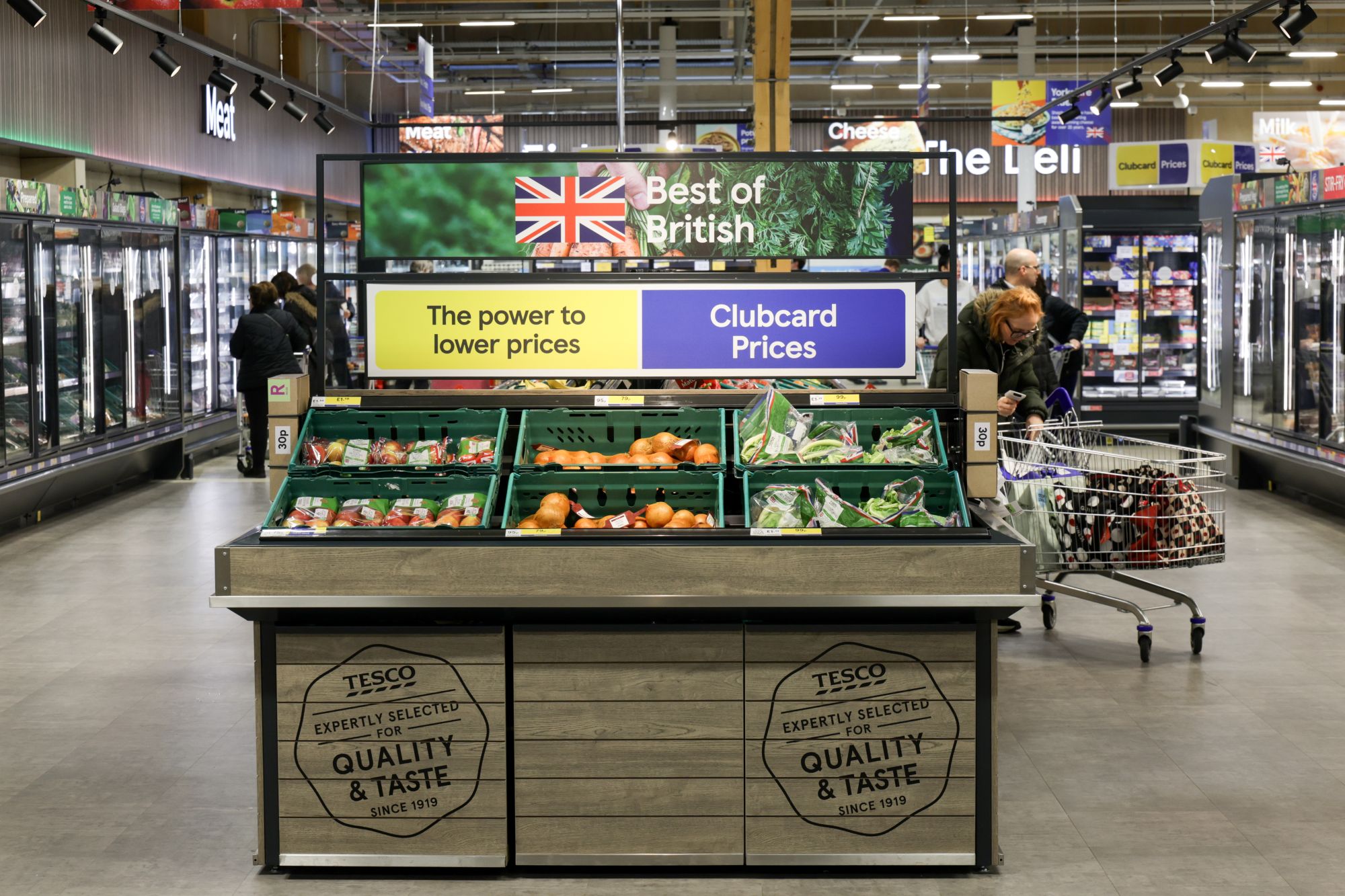
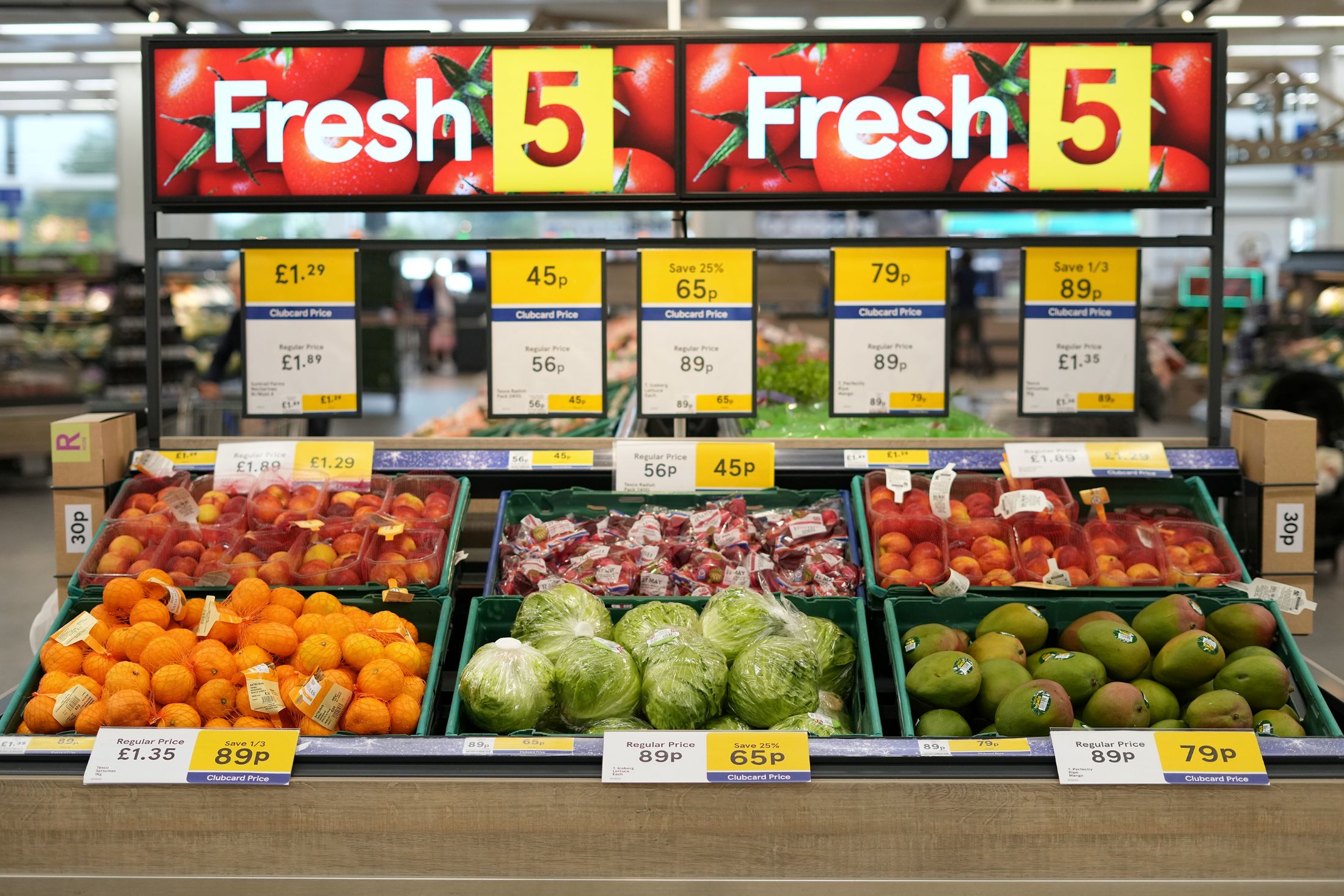
Fresh produce is the number one driver of quality perception for customers, and the number one driver of value perception as well. So, for me, the category has to be front of mind when customers walk into the shop, whether that is physically in-store or virtually online.
It has to show up consistently on both quality and value. If we get those things right, we then earn permission to take the category into more interesting areas, including innovation, new products and inspiration for customers.
Tesco has placed a strong public emphasis on affordable, healthy food. How does that ambition shape your thinking around the produce category, and when you think about a strong produce offer today, what is the right balance between value, quality, consistency and excitement for the shopper?
I talk a lot about “brilliant basics” being the foundation of any successful produce department. By that, I mean full shelves of high quality, responsibly sourced produce. It is easy to say, but very hard to deliver, particularly in the world we are operating in today.
At the same time, for the benefit of our retail business and our growers, we have to drive as much value into the category as possible. If we can encourage customers to trade up into higher-quality produce, or into convenient products that make their lives easier, then we are doing our job.
So the balance is about offering market-leading value, while also giving customers a reason to trade up into more premium produce, whether that is about flavor, quality, convenience or inspiration. If we get that right, we will be serving everybody.
That is a major challenge for produce. In-store, customers can see, touch and judge the product themselves. How do you approach that in the digital space?
First, it reinforces the need to be incredibly consistent. Customers have to trust that the product arriving at their front door is what they would have picked themselves in-store. That is the foundation.
Second, we need to be as helpful as possible about how a product or variety will show up for them. That means understanding which varieties, from which countries, at which times of year, will deliver the eating experience customers want.
Grapes are a good example. There are now dozens of commercial-scale varieties, and they can taste and look subtly different depending on the season and growing region. We cannot just say to customers that it is luck which one they get delivered to their front door. We have to be more precise about what is in the pack.
Being more helpful and more precise in how we sell produce is really important as the digital channel expands.
From your perspective, what does a really effective retailer-supplier relationship look like in produce today?
I talk to our supply team about the need for us to be greater than the sum of our parts. That starts with transparency and a clear understanding of where each side brings its strengths.
Of course, the supplier has to deliver the basics on the product. But there may also be expertise within Tesco that can help that supplier become stronger, whether that is insight into agricultural technology being used in other sectors, investment opportunities, land banks or something else.
Equally, suppliers may bring expertise in areas such as global logistics that can support Tesco more widely. The best relationships go beyond simply buying and selling product. They are about using each side’s knowledge and capability to create something stronger together.

What advice might you give a produce supplier hoping to work with Tesco?
First, come and talk to us. And second, do not feel that you need to bring a complete package.
Historically, people may have assumed that to approach a business like Tesco, they needed to be able to supply a product all year round and manage everything from breeding and growing through to logistics, packing and supply. In today’s world, we want to be more precise than that.
If a supplier has world-class packing capability, world-class genetics, an outstanding growing operation or expertise in any other part of the chain, I would be interested to understand it. The important thing is that they are open and clear about where the USP of their business really lies.
How do you approach the balance between local and seasonal sourcing on the one hand, and the need for reliable year-round supply on the other?
There is often a good meeting point where sourcing locally also means sourcing better-value, fresher produce, so it is in everybody’s interest. Customers value quality and value most of all, but provenance is increasingly part of their mindset at the shelf.
Tesco is the biggest customer of British agriculture, and we take that responsibility very seriously. We want to source local fresh produce as much as we can. But our ambition is also to grow consumption of fruit and vegetables in the UK, and to help customers eat more healthy food. To do that, we need a world-class global supply team that allows us to offer great-quality produce year-round.
If a product is unavailable for big chunks of the year because we cannot source it locally, it can fall out of the customer’s habitual shopping cycle, including their favourites online. Then they lose the habit of buying it, and that does not work for anybody.
What are the biggest challenges in managing a produce category at Tesco’s scale, whether in sourcing, availability, quality or forecasting?
We are all in fresh produce because we love it. We are not in it for an easy life, and that is true today more than ever. The greatest challenge is unpredictability, whether you are growing or retailing. Climatic, political and economic instability all make it harder. So the first challenge is resilience. That means growing in climatically diverse areas, having multiple routes into the UK, and having multiple points where product can be packed and prepared.
The second challenge is maintaining quality through every stage of the journey. With the growth of digital channels, there is now another link in the chain, from the store to the customer’s home. We have to make sure quality is upheld, and that the chill chain is maintained, especially for the most perishable products. And then, of course, we have to uphold our ethical standards from seed to shelf. We source from more than 12,000 growers in 53 countries, so delivering against all of that day in, day out is a real challenge. It is a satisfying challenge when you get it right, but it is one you have to stay alert to 24 hours a day, seven days a week.
Tesco has highlighted work around sustainable farming groups, grower standards and farming resilience. How do initiatives like these translate into the day-to-day realities of category management?
There are two things. First, we need our growers’ businesses to thrive if our produce department is going to thrive. Second, I believe soil health and soil management will be key determinants of product quality in the future. So all of our initiatives around sustainability matter. That includes work on the long-term sustainability of growers’ businesses, through things like sustainable farming groups, as well as environmental initiatives such as our low-carbon concept farm. This is no longer a very long-term issue. It is a medium-term issue, and it is really important that we set ourselves up properly for the next five years and beyond.
How do you see customer expectations in produce changing at the moment, whether in relation to value, convenience, health, provenance or sustainability?
Value, quality and convenience are still the three most important factors in how customers choose at the shelf. They always have been, and they are becoming more challenging to deliver in a multichannel world and in a more unstable sourcing environment.
On top of that, health and provenance are becoming more apparent. One example is the work we are doing to move some products to QR-coded lines, which will allow us to share much more information with customers about how a product is sourced and where it comes from. There are also some really encouraging trends that suggest customers will lean into fresh produce more in the future. From an industry point of view, that could be a once-in-a-lifetime opportunity. There is potential for unprecedented demand, and we have to be ready to meet it.
What opportunities do you see for private label to play a bigger role in building trust, differentiation and quality perception in fresh produce?
I see a very healthy future for private label produce. The reason is that, together with our supply partners, we have complete transparency of the supply chain from source to shelf. We know, to the nearest tree, where products were grown, how they were grown, how the grower has treated those plants over the years, what was grown in that soil previously and what is planned for the future.
That transparency extends all the way through varietal innovation, the chill chain, the factory and the shelf. So the trust behind private label produce should be second to none. That needs to be at the core of how we build customer confidence and loyalty. Private label also allows us to create clear differentiation between tiers, whether that is premium produce through Tesco Finest, or value produce at the other end of the spectrum. If customers understand those tiers and trust them, then private label can play a huge role in delivering high quality day in, day out.
Looking ahead, where do you see the biggest opportunities for innovation in produce, whether in product development, merchandising, packaging, supply chain management or grower collaboration?
There is opportunity in every one of those areas, but the two I would focus on are grower collaboration and supply chain management. In fact, I would take grower collaboration a step further back and talk about collaboration from breeders and seed houses through growing and into retail.
The industry has worked in silos for many years, and that needs to change. If we work more collaboratively on varietal innovation, we can take some of the risk out of the business for growers and suppliers. That is important if those businesses are going to thrive. It also allows us to get new products to market earlier. If retailers have visibility earlier, and can commit earlier, that gives growers the confidence to plant more. Then the product becomes more available, and we can get it onto shelves more quickly. The second area is supply chain management. In a complex global fresh produce chain, we are still far from perfect in how we treat perishable products, maintain the chill chain at the right temperature, and mitigate delays. There is an enormous opportunity to become more efficient, and, in some cases, that may mean suppliers working together.
In your view, what will distinguish the retailers that build the strongest produce departments in the future from those that fall behind?
The strongest retailers will still be the ones that deliver full shelves of consistent quality, responsibly sourced product. That sounds basic, but it is becoming harder. The retailers that focus on those basics will be the ones that earn the right to extend themselves into some of the more exciting areas of innovation. The other thing is recognising that customers need help shopping for fresh produce. That might be convenience, or it might be inspiration around how to use a product and what it does for them. We have to do the hard work of explaining how a product is going to taste, what a variety is going to deliver in any given week of the year, what will complement it and how customers can use it in their day-to-day lives.
What do you think the produce industry as a whole still needs to get better at if it wants to build a stronger future over the next five to 10 years?
There are three things on my mind. The first is that we have to be a great team. We have to look for opportunities to work together and trust that this will lead to commercial success. We also have to be better at sharing expertise. There are many cases in produce where different categories, countries or businesses are trying to solve almost the same problem. Agricultural technology is a good example. We need to get better at sharing that expertise, rather than everyone investing time and money to solve the same issue separately.
The second is delivering on our environmental responsibilities. There can be a temptation to think that one small part of the industry will not change very much. But if we all think like that, we will not deliver. There is a story I sometimes quote: someone says, “I’m too small to make a difference,” and the reply is, “Try going to bed with a mosquito in your room and tell me that in the morning.” Every small bit matters.
And third, we have to attract great young talent into the industry. Fresh produce can be a bit of a black box. Young people do not usually wake up thinking they want to work in fresh produce. But this generation is looking for purposeful employment, and there are not many industries that deliver on that more than ours. We need to show them the range of careers available, from software engineering to growing and everything in between.
To support this, we run the Future Farmer Programme, with Harper Adams University’s School of Sustainable Food and Farming. The programme runs an annual course for the next generation of British farmers, providing them with training on issues such as sustainable agriculture. It’s been great to see the programme benefit hundreds of farmers over the last three years.
When you look ahead to the future of fresh produce retail in the UK and Europe, what gives you the most confidence, and what do you think deserves the closest attention?
What gives me confidence is that I see customer trends and demand that point to a real opportunity for growth in the industry. I also see retailers in the UK and Europe recognising the importance of fresh produce within the food basket and starting to invest in it. The third factor is technology. There is a lot of technology coming through that will help us manage a complex, unpredictable and perishable set of products better and more reliably. For all of those reasons, there is a lot to be positive about.
But we have to balance that with two things. One is global instability, which means sourcing great-quality produce is only going to get harder. The second is economic instability, which makes investment for the future difficult at exactly the moment when it is more important than ever. There is a risk of a divide opening up. Businesses that invest will be able to use new technology to improve consistency, reliability and supply chain efficiency. Those that do not may go in the opposite direction, because of climate pressures and unpredictability.
So we have to make the right choices now for the medium and long term, not just for the short-term prosperity of the industry.