
Table grapes are a standard product in German food retailing. They are available on supermarket fruit shelves all year round. This continuous availability has earned them fifth place in the ranking of the most frequently purchased types of fruit in Germany, behind bananas, apples, oranges, and melons. Seedless varieties in particular have been on trend among private consumers for many years and continue to gain in popularity.
Record Import Volumes in 2025
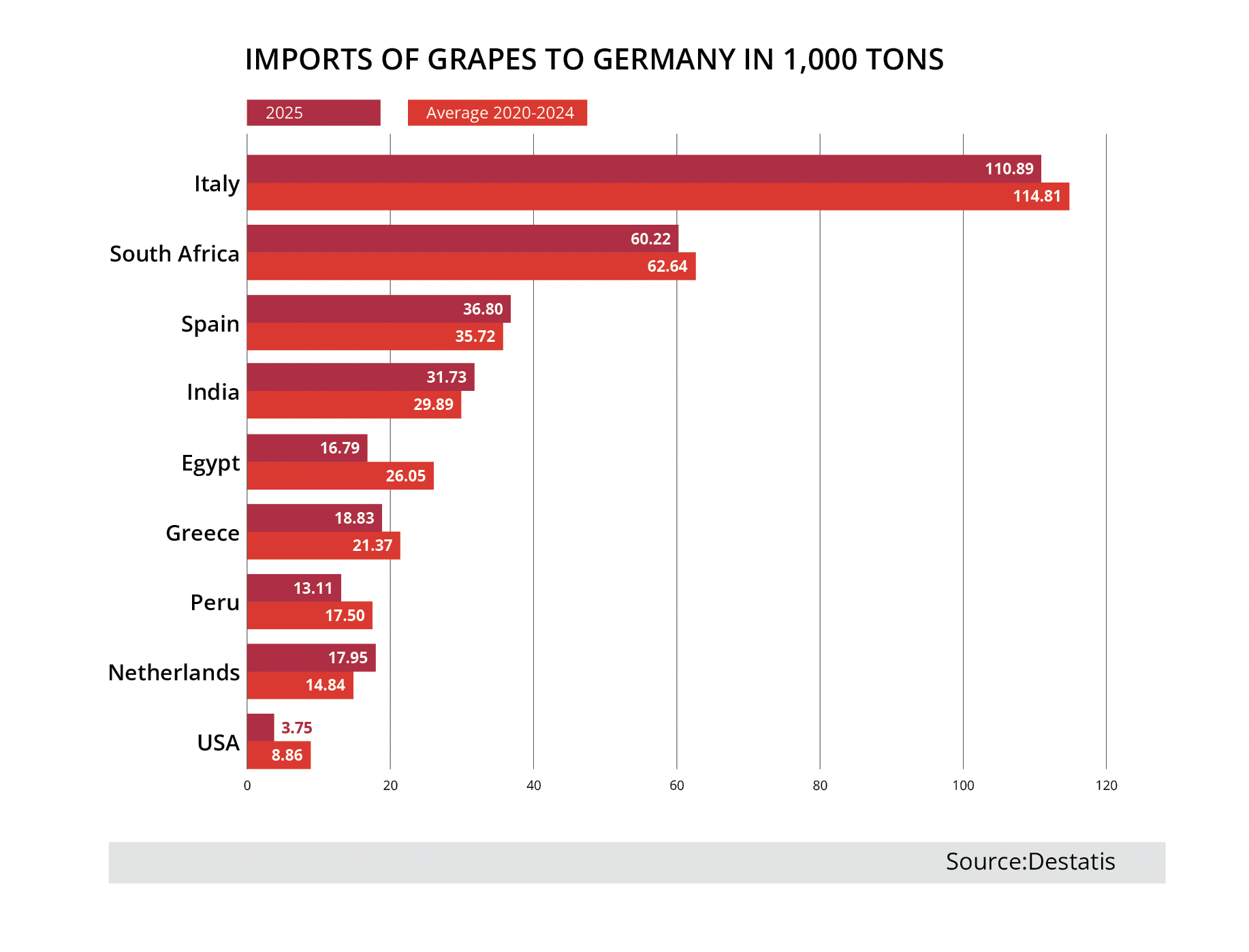
The German grape market is almost entirely dependent on imports. Table grapes are grown domestically, albeit on such a small scale that production is not captured in official statistics. As a result, the market is dominated by imports. These reached a record 360,000 tonnes last year, having grown by an average of 0.8% per year since 2016, according to Destatis. Import volumes had already reached a high level in previous years, which is why the long-term linear trend appears weaker than might otherwise be expected.
Italy remains by far Germany’s most important supplier of table grapes. However, among the five leading suppliers, Italy is the only one to show a negative trend over the past five years, largely due to falling yields. While the cultivated area has remained largely stable, weather-related factors led to below-average harvest volumes in Italy in 2022 and 2023, while summer heatwaves cut short the 2024 season.
Behind Italy, South Africa has established itself as the second most important supplier to the German market. In 2025, almost 63,000 tonnes of table grapes from South Africa were marketed in Germany, having grown by an average of 4.4% per year over the past decade, as the country increased production of table grapes for export. Spain, India, and Egypt complete the top five. Imports from Egypt have shown the strongest growth over the past ten years, increasing by around 7.5% per year.
Promotions Recover, but Remain Below Peak Levels
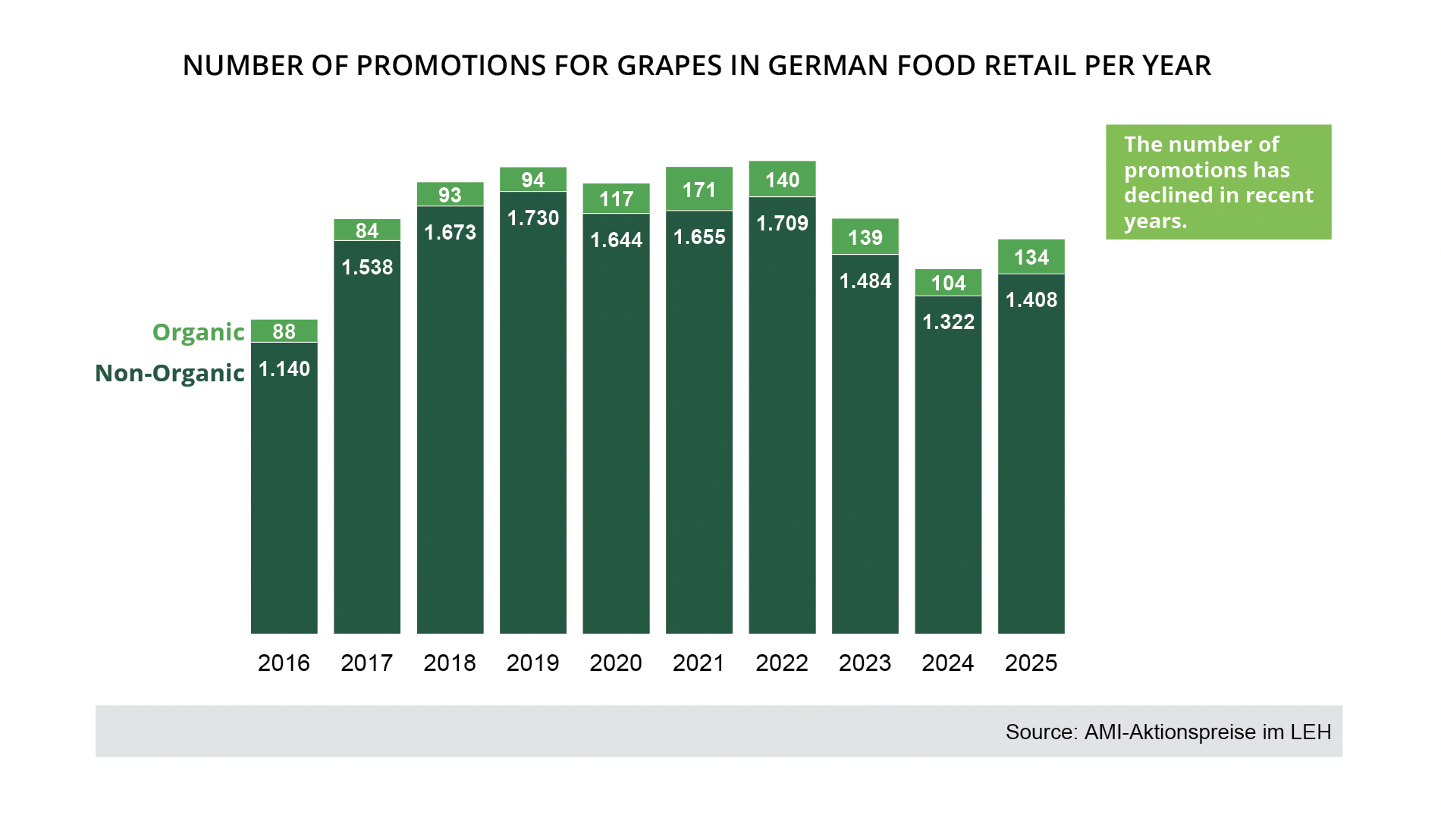
Grapes play a key role in advertising by German retailers. In 2025, grapes were the second most frequently advertised fruit behind apples. In total, AMI recorded 1,542 promotional listings for grapes in German food retailing. This represented an increase of 8% compared to the previous year, although down from peaks of around 1,850 promotional listings recorded in 2021 and 2022.
Green seedless grapes dominate promotional campaigns, but they also show the strongest negative trend within the overall assortment. Over the past ten years, the number of promotional listings for green seedless grapes declined by almost 3% (linear trend) per year. Grapes overall recorded an even stronger decline of 4.3% per year over the same period. The winners in promotional activity were mixed packs containing green and red seedless grapes, as well as exclusively red seedless grapes.
Just five pack sizes account for around 95% of all promotions. In contrast, 1-kilogram packs have become less common. Loose grapes have seen an even stronger decline, with the number of promotional listings falling by an average of 11% per year.
Medium pack sizes, such as 400 grams or 650 grams, on the other hand, have gained in importance. This reflects the trend toward smaller households as well as the growing participation of organic grapes in promotional campaigns, rising from around 5% in 2016 to almost 9% by 2025.
Private Households Purchase Increasing Volumes
Purchases of grapes by private households in Germany reached their highest level in 2021 during the Covid-19 pandemic. However, purchase volumes were also above average in 2025. Grape purchases have grown by an average of 1.2% per year over the past decade, reaching an average of 6.5 kilograms per household in 2025.
At an average price of €3.99 (£3.44) per kilogram, table grapes were around 3% cheaper for consumers in 2025 than in the previous year. In the long-term perspective, however, consumers in Germany have had to pay more for table grapes year after year. The linear trend from 2016 to 2025 shows an average annual price increase of 3%.
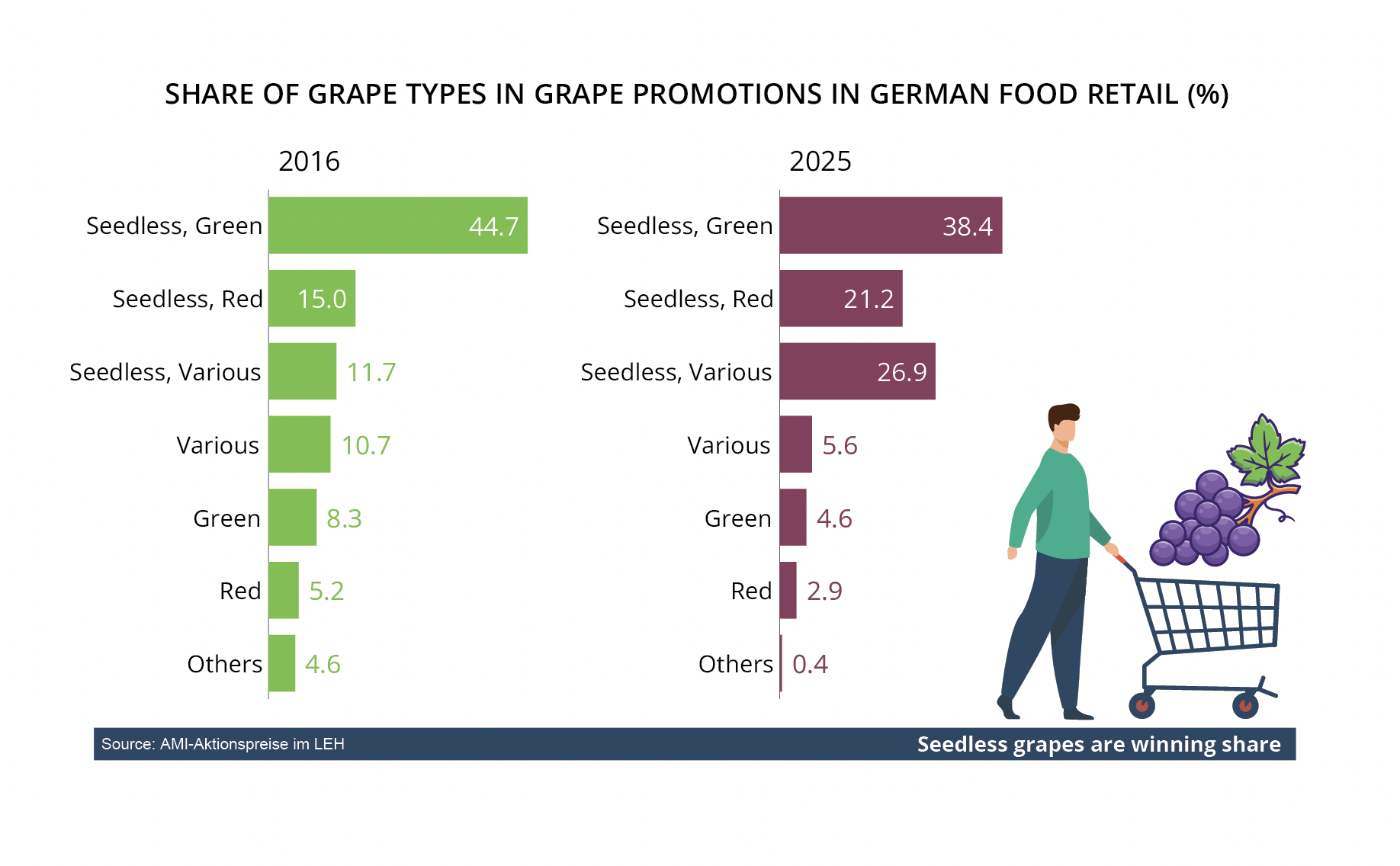
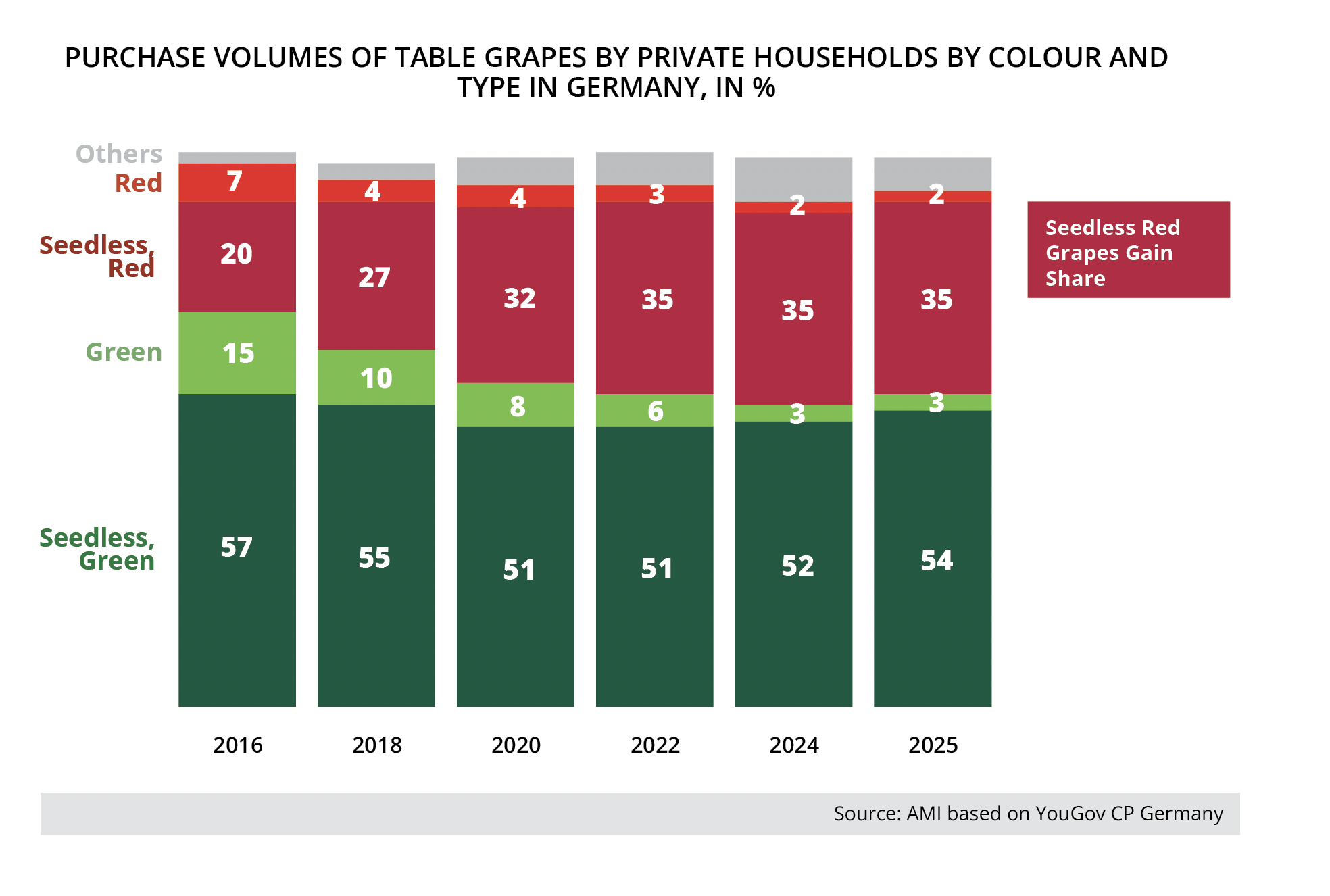
Within the assortment, there have been notable shifts over the past ten years. Grapes with seeds are clearly among the losers, with purchase volumes by private households declining by an average of 14.5% per year between 2016 and 2025. As a proportion of total grape purchase volumes, their share has fallen from nearly 22% to just under 5% in 2025, according to AMI analysis of data from YouGov CP Germany. Over the same period, purchases of seedless grapes increased by an average of 3.4% per year. Seedless grapes are particularly popular among younger consumers, while the steadily shrinking volume of seeded grapes is mainly purchased by households aged 65 and older.
The trend toward snacking has probably supported demand for seedless grapes as consumers seek small portions to eat on the go, during breaks, or when at home. In addition, eating seedless grapes is simply more pleasant.
Consumers in Germany also show a clear preference when it comes to color. Green grapes are much more popular than red or pink varieties, accounting for almost 57% of total grape purchases. Demand for mixed packs with different colored grapes has grown significantly during recent years, increasing in volume by an average of 12.8% per year between 2016 and 2025. No other grape type has grown as strongly. At the same time, grape mixes command the highest average price within the grape assortment. This suggests that, despite challenging economic conditions, there is still untapped potential in the German grape market.
• Agrarmarkt Informations-Gesellschaft mbH, or AMI, is a Bonn-based market information company specializing in agricultural and food markets.